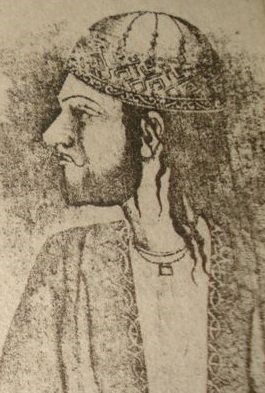
مومن خان مومن
A ghazal poet of intense romantic feeling, admired for precise, playful, sometimes daring couplets.
Life
Momin was a Delhi poet who wrote mostly ghazals, and he is remembered for the vivid, personal tone of his love poetry. He was also trained in medicine and astrology, a background that shows in the imagery of some of his verses.
Style and legacy
His ghazals are compact and often ironic, with a strong sense of the lover's pride and vulnerability. Many of his couplets are still quoted in Urdu conversation, and he remains a favourite of poetry lovers who enjoy wit inside passion.
Classic writings
Momin's ghazals are the centre of his work. They are personal and intense, and they concentrate on the lover's pride, jealousy, hope and disappointment. He often writes in the first person, with a direct voice that can sound both playful and wounded. His couplets are compact and surprising, and they show a poet who enjoyed the tension between self-respect and longing.
Momin's language is precise and his images are often drawn from daily life, medicine and the sky. His training in medicine and astrology shows in some of his metaphors, which use technical terms with wit. This gives his poems a distinctive texture, and it helped him stand out among the poets of Delhi who wrote for the same audiences in the same decades.
Momin also wrote qasidas and other forms, but the ghazal is where he is most admired. Critics have noted his ability to make a single couplet feel complete, and his skill with rhyme. He does not always aim for grandeur; often his effect comes from a small, sharp observation that makes the reader pause and smile.
Momin's reputation has grown with time. Many of his couplets are quoted in everyday conversation, and he is regarded as one of the most dependable masters of the classical ghazal. For readers who enjoy wit inside passion, his Diwan is a rewarding collection, full of finely made lines and a voice that remains lively after two centuries.
Momin's ghazals reward slow reading. Many of them build a small argument within a single poem, moving from a claim about love to a counter-claim about the beloved, and ending with a neat reversal. This structure gives the poems a dramatic quality, as if one were listening to a debate between the lover's pride and the lover's need.
Momin also shows a sense of humour about the lover's own failings. He mocks the foolishness of longing while still feeling its pain, and that double stance is one of the reasons his poems still speak to readers who know how love can make a person both proud and absurd. His Diwan thus offers a balance of wit and feeling that makes it a pleasure to return to.
Momin also rewards the reader who notices his sense of place. His ghazals move through the lanes, houses and gardens of Delhi, and the city becomes a background to the lover's changing moods. This gives his love poetry a social setting, and reminds us that the ghazal was always heard in a particular time and street.
Momin's ghazals are known for a delicate, personal manner. He wrote about love with a fine sense of mood, and his lines have a quiet, intimate quality, as if spoken to one listener. He also had interests beyond poetry, including medicine and astrology, and the careful, observing habit of that training seems to show in the precision of his verse. A small selection is enough to understand his charm. Many readers remember one couplet of his that Ghalib is said to have admired, a story often told in Urdu literary circles, though it is a tradition of anecdote rather than a fixed record. What the story shows is the high regard in which Momin was held, as a poet of subtle feeling and clean, graceful phrasing.
Read Momin Khan Momin (32)
Known works
Researched from published sources; the text is our own.