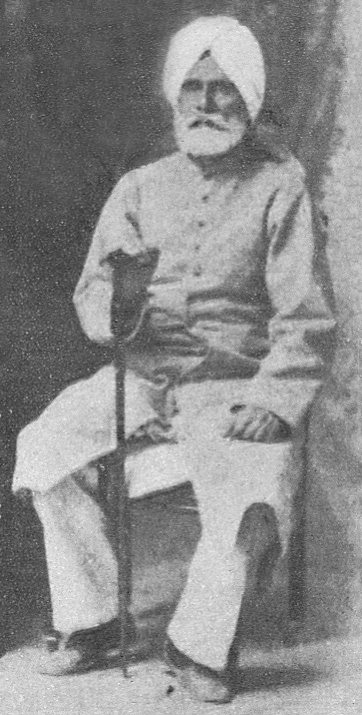
الطاف حسین حالی
A poet and critic who wanted Urdu poetry to be useful as well as beautiful, and who wrote the first great biography of Ghalib.
Life
Hali worked in the court of a Punjab patron and later taught in Lahore, where he met the reformers of the Anglo-Oriental movement. He wrote about the decline of Muslim society and the need for education, and his writing shaped the modern Urdu prose tradition.
Style and legacy
His Musaddas, a long poem on the rise and fall of Islamic society, is a landmark of Urdu reformist verse. His critical essays asked for natural speech, clear thought and honest feeling, and his biography of Ghalib remains a key source on the poet's life.
Classic writings
Hali's Musaddas is a long poem in the musaddas form, written in response to a moment of crisis for Muslim society in India. It reflects on the glories of the past, the decline of learning and virtue, and the need for reform through education and honest self-examination. The poem was widely read and shaped a generation of readers who wanted Urdu literature to serve social and moral purposes.
His prose criticism asked for a new kind of Urdu poetry: natural, sincere, useful, and close to life. Hali argued that poets should write about real experiences rather than repeat conventional praise. This argument was an important step in the history of Urdu criticism, and it influenced later writers who wanted poetry to address the present.
Yadgar-e-Ghalib, his biography of Ghalib, is one of his most important works. It is careful, affectionate and critical where needed, and it gives a detailed picture of Ghalib's life, character and reputation. The book helped to establish Ghalib as the central figure of modern Urdu poetry and remains a basic source for anyone studying the poet.
Hali's achievement lies in his combination of moral seriousness and literary skill. He wrote for a public that needed guidance and inspiration, and he never let his purpose outweigh his art. His reform programme, his criticism and his poems together show a writer who thought deeply about what literature was for, and who gave Urdu a more thoughtful sense of its own future.
Hali's prose style is clear and balanced, a deliberate contrast with the ornate prose of earlier writers. He wanted sentences that could carry an argument, and his criticism shows a mind that values reason, observation and fairness. This made his writing a model for later Urdu critics, who learned from him to speak directly about the merits and faults of a text.
Hali also understood the importance of sympathy in literary judgement. In his biography of Ghalib he is critical of some habits of the poet but never dismissive of his genius. This generous and serious approach has made his book a lasting example of how an Urdu writer can write about a great predecessor with both admiration and honesty.
Hali's writing also contains a self-reflective side. He is open about his own doubts and about the difficulty of reconciling tradition with reform. This honesty is part of his appeal: he presents himself as a student of his age who is trying to find the right path for the language and for his community.
Hali is the poet who asked what poetry is for. His Muqaddama-e-Sher-o-Shayari, a long essay on poetry, is counted among the founding works of modern Urdu criticism, and in it he argued for honesty, simplicity and a link between verse and real life. His long poem known as the Musaddas gave the new idea a voice, reflecting on the rise and decline of a community in a flowing, accessible style. He also wrote a memoir of Ghalib, which remains a valued early work of Urdu biography. For a reader today, Hali is a doorway from the old courtly ghazal toward the modern age. Start with a short extract of his criticism, then read a passage of the Musaddas to hear how he put his ideas into verse.
Read Altaf Hussain Hali (28)
Known works
Researched from published sources; the text is our own.