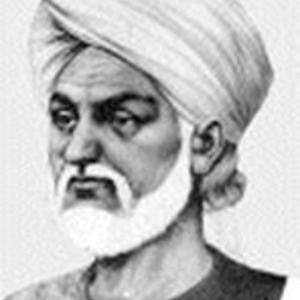
خواجہ میر درد
A Sufi poet of Delhi whose ghazals turn mystic longing into everyday feeling.
Life
Dard came from a family of Sufi teachers and spent much of his life in devotion and study in Delhi. He wrote both poetry and prose on Sufi thought, and he kept a quiet distance from the courtly competition of his day.
Style and legacy
His ghazals are short, calm and inward, focused on the self in prayer and on the limits of human love. Readers return to him for a gentler sort of melancholy than the one found in Mir or Sauda.
Classic writings
Mir Dard's most important work is his Diwan, a collection of ghazals written in Urdu and Persian. His ghazals are brief and inward, and they concentrate on the soul's relation to God. He writes of longing, of the veil between the lover and the beloved, and of the way ordinary life can become an occasion for prayer. The tone is calm and reflective, far from the political and courtly concerns of many of his contemporaries.
Dard also wrote prose on Sufi thought. These works explain the Naqshbandi way of spiritual discipline and reflect on the nature of the self, the heart and the path to God. For a reader today they offer a window into the spiritual life of eighteenth century Delhi, where Sufi circles were important centres of learning and conversation alongside the mushairas and the courts.
The imagery in Dard's ghazals is often drawn from the everyday world of the house, the garden and the wine-house, but it is read on several levels, as both human and mystical. This layering is part of his artistry. A couplet that seems to be about a lover can also be about the seeker's relation to the divine. Dard handled this double meaning with a light touch, and his best couplets are remembered for their balance of feeling and thought.
Dard's legacy is a quieter one than Mir's or Ghalib's, but it has deep roots. He is a model of the Sufi poet who writes for the heart and the spirit rather than for applause. Modern readers who enjoy a gentler, more contemplative Urdu often return to him, and his ghazals are still quoted in gatherings where spiritual feeling and poetic craft are both valued.
Dard's prose on Sufi practice, written in clear and careful language, explains how a seeker might move from outward observance to inward understanding. It draws on older Sufi writings and on the teaching of his own circle, and it shows a mind that thought carefully about the relationship between knowledge, love and discipline. The prose is serious rather than showy, and its calm tone matches the poems.
For readers who come to Urdu through the ghazal, Dard offers a useful counterpoint to the more worldly poets. He reminds them that the same forms can carry prayer as well as passion. A reader who enjoys his gentleness often goes on to explore the wider Sufi tradition of Urdu, including the shrine music and the devotional verse that followed in later centuries.
Dard's calm voice is also a useful corrective for readers who come to Urdu only through the romantic ghazal. His poems remind us that the same vocabulary of wine, garden and beloved can carry a spiritual meaning, and that a lover's pain can be a path to the divine. This quiet double meaning is his most distinctive contribution to the tradition.
Dard is the poet to read when you want quiet. His ghazals turn toward inner life, longing and the thought of the divine, and they do it in a calm, musical voice without heavy display. He was closely linked with the Sufi tradition of his time, and that thoughtful, searching mood runs through his verse. His output is smaller than that of some of his famous contemporaries, which makes him easy to approach: a short selection gives a fair picture. Readers often find that his couplets feel clean and unhurried, as if each word has been weighed. Place him beside Mir and Sauda and you see three different temperaments in the same Delhi school, one tender, one forceful, and one contemplative.
Read Khwaja Mir Dard (24)
Known works
Researched from published sources; the text is our own.