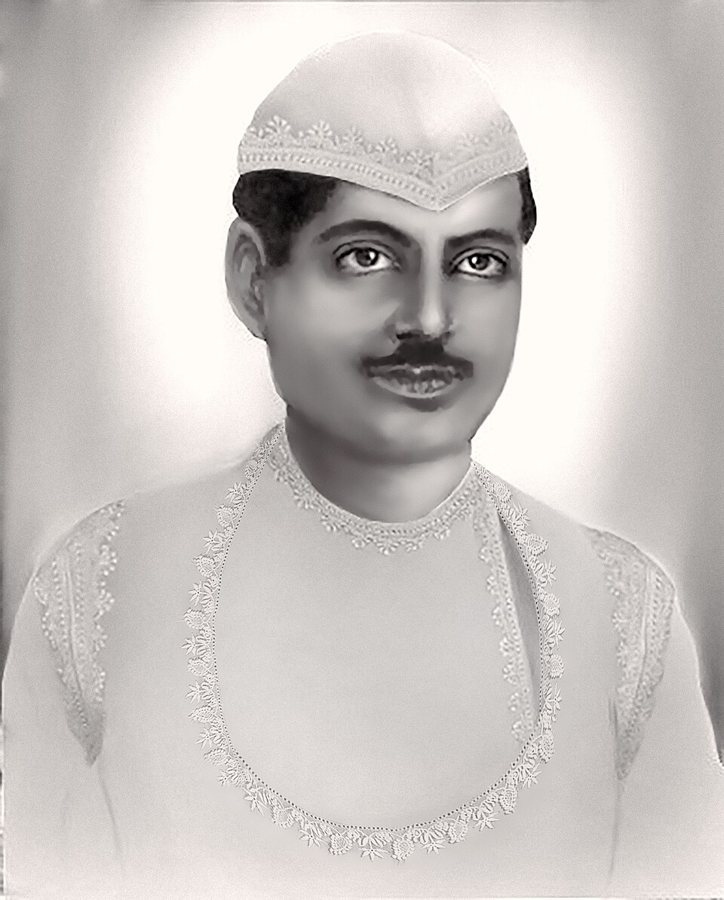
مرزا محمد ہادی رسوا
A novelist of Lucknow whose story of a courtesan poet became a classic of Urdu fiction.
Life
Ruswa was a scholar of Persian, Arabic and mathematics, and he taught in Lucknow. His novel about Umrao Jaan Ada draws on the city's courtly life.
Style and legacy
The novel is written with precision and subtle irony, and its portrait of Lucknow's culture has been adapted into film.
Classic writings
Ruswa's novel about Umrao Jaan Ada tells the story of a courtesan poet in Lucknow. The narrator recounts the life of the heroine, her poetry, her clients and her social world, and the novel becomes a portrait of the city's courtly culture. Ruswa writes with precision, irony and sympathy.
The book is notable for its attention to manners, speech and the rituals of the mehfil, the private gathering where poetry and music were performed. These details give the novel a rich sense of a lost world, and they explain why it has held the attention of readers and filmmakers for more than a century.
Ruswa's own learning, in Persian, Arabic and mathematics, is evident in the structure and style of the novel. He balances the narrative with reflections on fate, love and the limits of social judgement. The result is a novel that is serious about its subject while remaining entertaining.
Ruswa's legacy is a central place in the history of Urdu fiction. His novel is among the most read works from Lucknow, and it has inspired adaptations in film and other media. It shows how an Urdu novel could combine social observation with a delicate portrait of a woman's inner life.
Ruswa's novel also engages with questions of morality and social judgement. The narrator's voice is ironic, and the book does not offer a simple condemnation or praise of its heroine. Instead it presents a world in which love, art and social pressure are tightly bound, and the reader is left to weigh the evidence.
The novel's afterlife includes stage and film adaptations, which have carried its story to audiences far beyond the readers of Urdu. These adaptations show how durable the central figure has been in the cultural memory of the subcontinent.
Ruswa's novel invites the reader into the private world of the mehfil, where poetry and music were performed for a select audience. He describes the rules, the rivalries and the emotional stakes of that world, and in doing so he offers a unique window into the culture of nineteenth-century Lucknow.
Ruswa's attention to the moral life of his characters gives the novel its depth. The heroine's choices are shaped by poverty, art and the expectations of her world, and the author presents her with sympathy and honesty. The novel invites the reader to think about the boundaries that society draws around women and art.
Mirza Hadi Ruswa is remembered above all for Umrao Jaan Ada, a novel often counted among the first modern Urdu novels. It tells the life of a courtesan of Lucknow in her own voice, with close attention to the poetry, manners and customs of that city. The book has been adapted for the screen more than once, which has kept the story alive for new audiences. For a reader, the novel offers both a human story and a record of the cultured, poetic Lucknow world with its mushairas and etiquette. It is best approached as a work of fiction rather than a documentary. A first reading in a good edition, with notes on the language, brings out its warmth and sadness.
Known works
Researched from published sources; the text is our own.