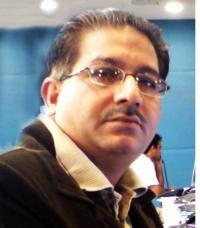
پروین شاکر
A poet who gave modern Urdu a frank, intimate female voice in love poetry.
Life
Parveen Shakir was born in Karachi and studied English literature before joining the civil service. Her early books were published to great public interest, and her poems were read widely in Pakistan and India.
Style and legacy
Her verse is spare and precise, with everyday images and a clear feminine perspective on love and independence. She is among the most influential women poets in Urdu.
Classic writings
Parveen Shakir's poems are written in a clear and personal voice, centred on a woman's experience of love, marriage, independence and self-discovery. Her images are domestic and precise: a fragrance, a cloth, a window, a small gesture. Through these she builds a world in which the inner life of a woman becomes the subject of serious poetry.
Khushboo, her first collection, made her famous. Its poems are fresh and confident, and they gave Urdu readers a new kind of frankness about feeling and desire. Sadbarg, which followed, deepened her range, with poems that look at the difficulties of an independent woman in a society with clear expectations.
Parveen's language is spare and crisp. She avoids excessive ornament and relies on the sharpness of a single image or an unexpected turn of thought. This economy made her poems memorable and helped her reach readers who did not usually read classical verse.
Her legacy is large. She is one of the most important women poets in Urdu, and her work has encouraged later writers to speak openly about women's lives. Her early death in a road accident in 1994 cut short a career that had only begun to show its full range.
Parveen's poems also show a close attention to nature. Rain, flowers, the sea and the seasons recur in her verse as signs of feeling and change, and they are rendered with a painter's eye for colour and a poet's ear for sound. This gives her work a vividness that is easy to recognise even in short extracts.
She was also a civil servant and a university student of English, and her education is visible in the clarity of her structure and her control of tone. Her poems speak to readers who value precision, and her later books show a growing confidence in exploring the quieter corners of experience.
Parveen's poems about the self are among the most original in modern Urdu. She writes about a woman's wish to be seen, to be honest and to choose her own path, and she does this without the grand rhetoric that had marked earlier protest poetry. The result is intimate, precise and lasting.
Parveen's images of home, clothing and the body are carefully chosen to show a woman's life from the inside. Her poems do not explain themselves; they present a moment and let the reader feel its weight. This method gives her verse a directness that continues to surprise and move new readers.
Parveen Shakir brought a new, fresh voice into Urdu poetry by writing about love and daily life from a woman's point of view with openness and grace. Her images, a first meeting, a changing season, a long wait, are drawn from a young woman's world, and they carry a gentle intelligence. She also worked as an educator and a civil servant. Her first collection, Khushboo, made her famous, and later books deepened her range. Many younger readers begin their love of Urdu with her. A good way to read her is to take a handful of poems from different books and notice how her voice grows from delicate hope to a firmer, more reflective maturity. She remains an inspiring example for new women writers.
Known works
Researched from published sources; the text is our own.