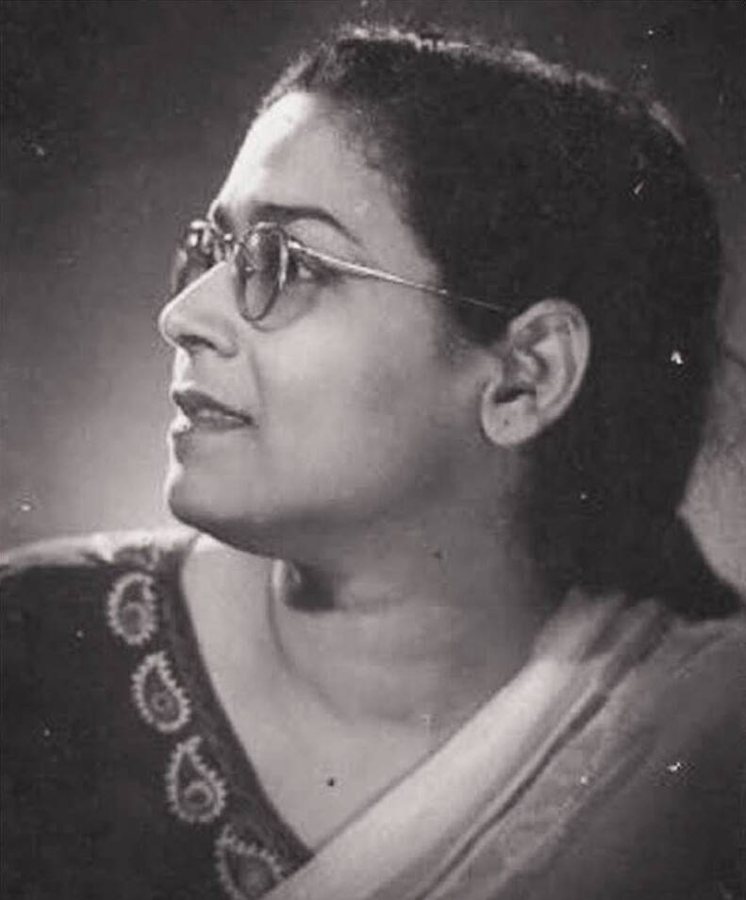
عصمت چغتائی
A novelist and short story writer who wrote frankly about women's lives and desire in conservative families.
Life
Ismat Chughtai was born in Badaun and grew up in a large family in Uttar Pradesh. She wrote for the progressive journals and later worked in Bombay's film industry.
Style and legacy
Her stories, including Lihaaf, drew court cases and public outcry for their frank portrayal of women. She remains one of the most important women writers in Urdu.
Classic writings
Ismat Chughtai's fiction explores the inner lives of women in families that expected obedience and silence. Her stories use a sharp, sometimes comic voice, and they treat desire, marriage and the body with a frankness that was rare in her time. She shows how the household becomes a place of power, rivalry and quiet rebellion.
Lihaaf, her most famous story, depicts a relationship between women in a conservative household, and it brought her a court case over obscenity. The story is subtle in its suggestion, and it draws its force from the gap between what is said and what is understood. It remains one of the best-known stories in Urdu.
Her novels and other stories also examine class, education and the changing role of women. Ismat was a keen observer of the middle class, and she showed its anxieties about status and propriety with a lively wit. Her style is conversational and rich in detail, and her characters often surprise the reader.
Ismat's legacy is a wider space for women's writing in Urdu. She opened subjects that earlier writers had avoided, and she inspired later writers to tell women's stories with honesty. Her work is read as both a literary achievement and a social record of her time.
Ismat also wrote a memoir and a series of essays in which she recalls her childhood, her family and her early struggles as a writer. These pieces are candid and witty, and they show how her fiction grew from the life she had known in a large and often restrictive household.
Her work has been studied for its contribution to the feminist reading of Urdu literature. Critics note her insistence on the reality of women's desires and her refusal to make women into symbols. Her stories are read today as both literary achievements and social documents.
Ismat's stories about families, servants and the women of the household offer a detailed social record. She describes the textures of daily life, the gossip, the rivalries and the small cruelties, and she gives her characters a voice that refuses to be silenced. Her work remains an important witness to the lives of women in her time.
Ismat's humour and her sharp observation of family life make her stories both funny and painful. She shows how small domestic rules can crush the spirit, and how women find ways to resist. The energy of her prose makes these stories among the most vivid in twentieth-century Urdu fiction.
Ismat Chughtai wrote with fearless wit. Her stories and novels look closely at middle-class Muslim households, at women's lives, at friendship and desire and the small politics of family, in a lively, spoken Urdu full of idiom. Her story Lihaf caused a famous debate and a court case, and she defended her right to write about what she saw. Her novel Tedhi Lakeer and her memoir stories show her range. She also wrote for the cinema. Reading her is a good way to meet the humour of Urdu prose, which can be as fast and funny as any dialogue. Start with one of her shorter stories, and enjoy the voice before the argument, since the voice is her greatest gift.
Known works
Researched from published sources; the text is our own.