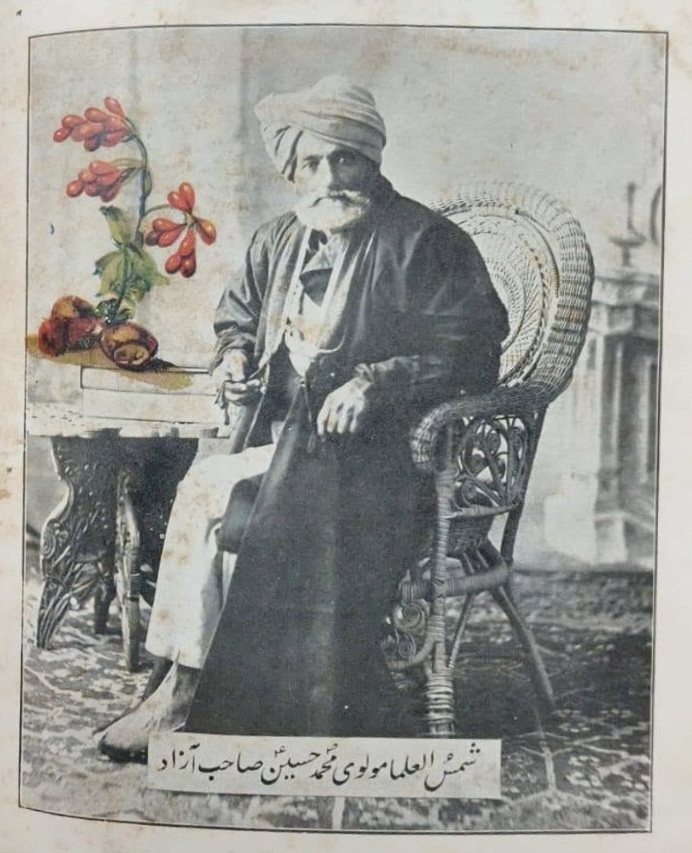
محمد حسین آزاد
A critic and prose writer who wrote the history of Urdu poetry in a lively, readable style.
Life
Azad was born in Delhi and worked as a teacher and writer in Lahore. He is known for his account of Urdu poets, which made the history of the ghazal accessible to general readers.
Style and legacy
His prose is ornate yet clear, and his criticism shaped how later writers thought about Urdu tradition and its poets.
Classic writings
Muhammad Husain Azad's Aab-e-Hayat is a history of Urdu poetry, written with energy and personal judgement. He traces the development of the ghazal and the poets who shaped it, from the early masters to the nineteenth century. His book made the history of Urdu accessible to general readers and gave a sense of the tradition as a living story.
Azad's prose is ornate yet clear, a style that was admired by his contemporaries. He moves between praise, analysis and anecdote, and he is not afraid to offer strong opinions about the merits of poets. His portraits of the great figures are vivid and sometimes affectionate, sometimes critical.
Azad was also a teacher and reformer who worked in Lahore, and he was involved in the wider debates about education and literature in his time. His work belongs to the same movement that produced Hali's reforms, and he shared the desire for a more natural and useful Urdu prose.
Azad's legacy is the shape he gave to the study of Urdu literature. Later critics built on his account of the poets, and his book remains a standard source for those who want to know how the tradition has been understood.
Azad's studies of Urdu poetry also include essays on the poetic language and on the figures of earlier centuries. His approach mixes historical detail with aesthetic judgement, and he tries to explain why certain poems move readers. This interest in the reasons for literary pleasure is one of the most attractive qualities of his criticism.
His portrait of the poets of Delhi preserves stories and anecdotes that would otherwise be lost, and it gives readers a sense of the social setting of the poetry. For this reason his book is often read as a history of culture as well as of literature.
Azad's history is also a lesson in how to write literary criticism with personal engagement. He is willing to praise, to question and to tell stories about the poets he admires. This mixture of scholarship and affection made his book a companion for generations of Urdu readers.
Azad's portraits of the poets are also a form of social history. He writes about their patrons, their rivalries, their homes and their reputations, and so the book shows the literary world as a human society. This makes his history one of the most engaging accounts of Urdu's early culture.
Muhammad Husain Azad stands near the beginning of modern Urdu prose. His book Ab-e-Hayat, a lively account of Urdu poets and their ages, is part history, part storytelling, and it shaped how many readers pictured the great names of the past. It is read today with an awareness that it mixes fact with anecdote, so it is best enjoyed as literature and checked against later scholarship. Azad also helped bring a new, modern style into Urdu poetry through the Lahore gatherings of his time. A short extract from Ab-e-Hayat is a pleasant way in, and it reminds a reader that Urdu criticism began as a storyteller's art, with portraits drawn in warm, flowing sentences.
Known works
Researched from published sources; the text is our own.