Content note Mentions police presence and unrest (non-graphic).
It went at 9:47 on a Tuesday night. I know the time because I was in the middle of sending my sister a voice note, and the little circle kept spinning, and spinning, and then a red exclamation mark appeared beside it like a tiny alarm.
At first I thought it was my phone. Then I heard the neighbours. Up and down our building, through the thin walls and open windows, came the same sounds: a curse, a laugh, the bang of someone shaking a router as if that ever helps. A child crying because her cartoon had frozen. Somebody’s television, still working, playing a cooking programme very loudly into the sudden quiet.
By midnight we knew. Not from the news — the news was a cooking programme — but from Mr. Daruwala on the ground floor, who still had a landline, and whose son worked for the telephone company, and who walked up all five flights of stairs in his slippers to tell each of us in person. “They’ve switched it off,” he said at each door. “The whole city.”
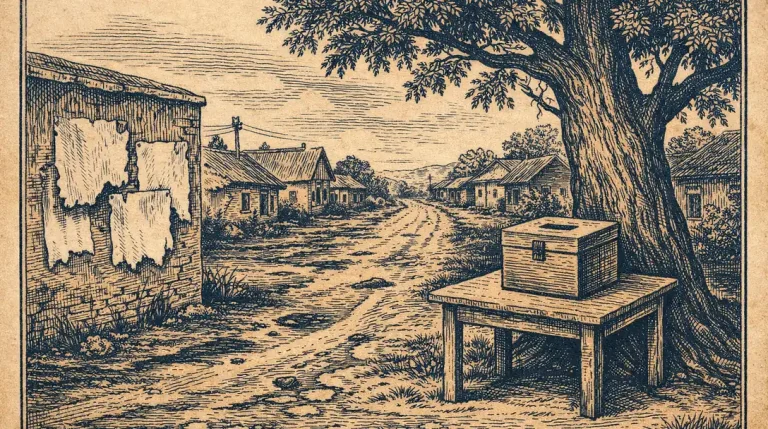
Everyone knew why. There had been protests downtown for a week, ordinary people with banners about rising prices and a new law that let the police detain anyone for “spreading confusion.” The marches had been getting bigger. The videos had been getting shared. And now there were no videos, because there was nothing to share them on.
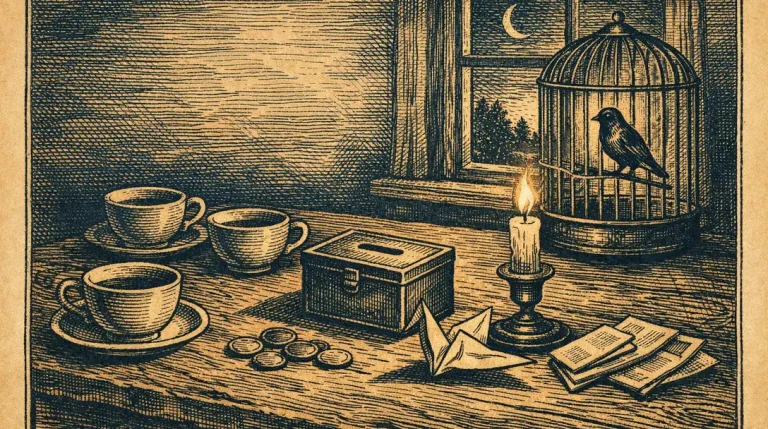
The first day was strange in a way I find hard to describe. I kept reaching for my phone, unlocking it, staring at the screen, putting it back in my pocket. Twenty, thirty, fifty times. It was like having a phantom limb. I couldn’t check whether my sister was all right. I couldn’t check if my office was open. I couldn’t pay for groceries, because the card machines needed the network, and I had about four coins in cash.
The second day, the city began to remember how to be a city.
The bank queues stretched around the block, everyone withdrawing cash before the machines ran out. The man at the corner shop started writing debts on a school exercise book — Flat 3B, bread and milk — the way his father had done, he said, before any of us were born. People who had lived on the same street for years without speaking began to stand in doorways comparing rumours. Someone said the army was coming. Someone said the protesters had all gone home. Someone said it was only a technical fault. Nobody knew anything, which made everybody an expert.
On the third day, I walked across the city to find my sister.
It took me two and a half hours. There were police at some of the big intersections, standing in groups, watching. I kept my head down and my hands visible. I passed a café with a hand-lettered sign in the window: NO WIFI. WE TALK HERE NOW. Inside, it was full — people around tables, actually talking, actually loud, a man reading a newspaper aloud to a group who interrupted him every few lines to argue.
My sister’s building was fine. She was fine. She opened the door and burst into tears and then hit me on the arm for not coming sooner, and then fed me, and then cried again. Her neighbours had organised a list on the lobby wall: names, flat numbers, who needed medicine, who had a car, who could check on the old lady on the sixth floor. Someone had drawn a small map of the area marking which shops took cash and which had bread.
“It’s like we got the whole building back,” she said, and then looked guilty for saying it.
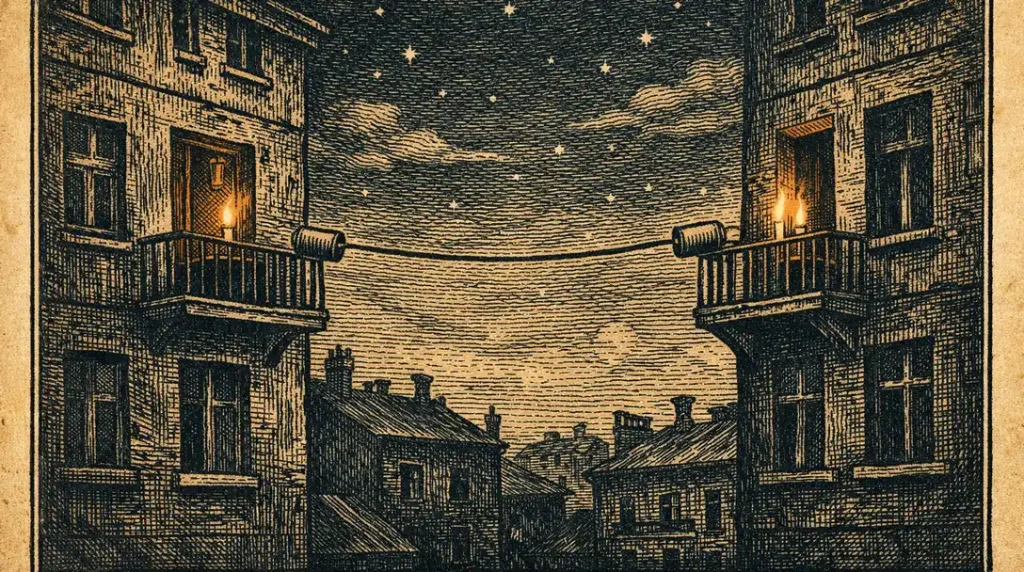
That night I stayed with her. We sat on her balcony and listened. Without the hum of a hundred thousand phones, the city sounded different — closer, older. We could hear a radio somewhere playing old songs. A couple arguing in the next building about whose turn it was to queue for cash. And, very faint, from downtown, a sound like the sea. Thousands of voices, chanting something we couldn’t make out.
“They’re still there,” my sister said.
They were. That was the thing nobody had expected. You could switch off a network, but you couldn’t switch off the square. Without the videos, people had to go and see for themselves. Without the messages, they had to knock on doors and say come. Mr. Daruwala told us later that the crowds on the fourth night were the biggest of the whole week.
On the fifth day, at 3:12 in the afternoon, my phone buzzed in my pocket. Then buzzed again. Then didn’t stop — a flood of messages, five days of them, arriving all at once like water through a broken dam. My voice note to my sister finally went through, ninety-six hours late, my own voice saying are you watching this, about something I could no longer remember.
The government said the outage had been “a precautionary technical measure.” The new law was withdrawn a few weeks later, quietly, at a press conference nobody watched.
Life went back to normal, mostly. I check my phone fifty times a day again. I’m not proud of it.
But I still go to the café with the hand-lettered sign. They never took it down. And every month or so, my sister’s building has a dinner in the lobby, the whole list on the wall, the old lady from the sixth floor at the head of the table. My sister always saves me a seat. Nobody brings their phone.