The Word Tax was introduced, like most things, as a temporary measure.
“A small contribution,” the Minister of Revenue explained on television, “toward the noise our nation produces. Every word spoken in a public place places a burden on our infrastructure — on our air, on our peace, on our national calm. It is only fair that those who speak the most should contribute the most.”
The rate was modest at first: a tenth of a coin per word, collected automatically by small grey listening devices mounted on lampposts, bus shelters and the corners of every shop. Words spoken at home were exempt. Words in praise of the nation were exempt. Words in the national anthem were not only exempt but refunded, at double the rate, which led to a great deal of singing on public transport.
My father, who sold fruit at the market, was ruined within a month.
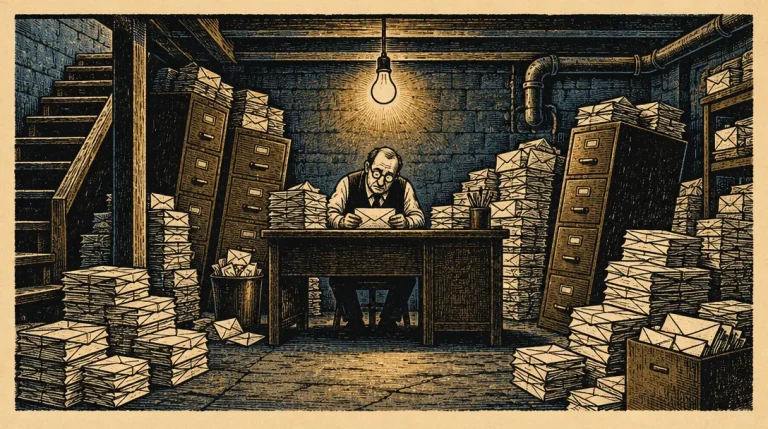
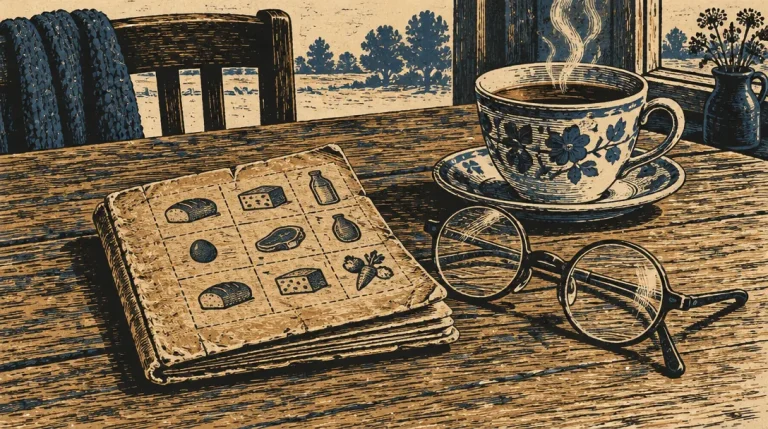
You cannot sell fruit without talking. “Mangoes, fresh mangoes, sweet as honey, three for the price of two!” That is eleven words, and he said it, by his own estimate, four thousand times a day. At the end of the first week the bill arrived in our letterbox in a pale blue envelope. My mother opened it at the kitchen table, read it, and put it down very carefully, as though it might explode.
After that, my father stopped calling out. He stood behind his fruit and pointed. He wrote prices on cardboard. He learned to raise one eyebrow in a way that meant These are the best in the market, and both eyebrows in a way that meant For you, a special price. Customers learned to read him. Business recovered, a little.
The rate went up the next year. Then again. Adjectives were taxed at a higher rate than nouns, because they were “decorative.” Questions were taxed at a premium, because they “created further speech.” Words of complaint — unfair, why, enough — were moved to a special luxury bracket, at a rate so high that a single sentence of protest could cost a month’s wages.
People adapted, as people always do.
At first we spoke less. Then we spoke shorter. Greetings shrank. Good morning, how are you? became Morning, then a nod, then nothing. At school, children answered questions in single words and teachers marked them down for laziness, then quietly stopped marking them down. Lovers proposed with rings and no speeches. Funerals became very quiet, which some said was an improvement.
Then, slowly, something else began to happen.
It started in the market. One morning I watched an old woman buy a melon from my father. Neither of them said a word. She held up the melon, tilted it, sniffed it, and looked at him. He tapped it twice, held up three fingers, and touched his heart. She laughed, silently, and touched her own heart, and paid him, and left. The whole conversation took eight seconds, and I understood every bit of it: Is it ripe? — The best I’ve got, for you a fair price, I swear on my life. — I believe you, you old crook.
It spread like that. Through the market, through the buses, through the long queues at the Ministry where people waited to pay their Word Tax bills. A language grew up without a single word in it. Two taps meant yes, truly. A hand flat on the table meant I’m with you. A finger tapping the temple twice meant they’re listening. A slow blink meant I’m sorry. There was a gesture for the price of bread, and a gesture for the Minister, which I will not describe here, and which was taxed at nothing at all because the listening devices could not hear it.
My mother was the best at it. She could tell a whole story with her hands while stirring a pot — a story about the neighbour’s son who had been taken in for asking a question, about the rumour that the tax would rise again, about her own mother, who had lived through an earlier silence and said it had been just like this. By the time I was fifteen, I could follow her perfectly. I sometimes think it was the most honest our family had ever been.
The Ministry noticed, of course. The Minister appeared on television looking troubled. Revenue from speech had fallen by sixty percent. The nation, he said, had become “suspiciously quiet.” A new measure was under consideration: a tax on gestures.
That evening, our street did something no one had planned.
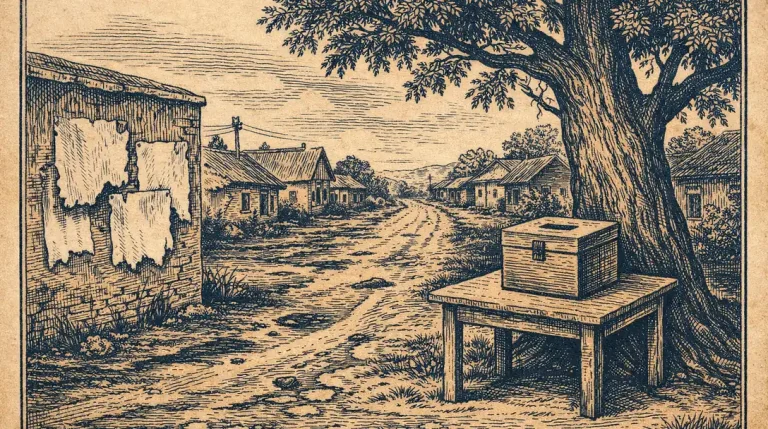
At seven o’clock, as the Minister’s broadcast was still playing on every television, people began coming out of their houses. They didn’t speak. They didn’t chant. They didn’t carry signs, because signs were words, and words were taxed. They simply stood on their doorsteps and the pavements, the whole street, the whole district, and put their hands flat on their chests.
I’m with you.
Then someone began to clap. Slowly. Not in applause — in rhythm, like a heartbeat. Others joined. The sound rolled down the street and around the corner and into the next street, a great slow wave of hands, thousands of them, a sound with no words in it at all, which the grey devices on the lampposts recorded faithfully and could not bill.
I stood beside my father on the step of our house. He looked down at me and tapped his temple twice — they’re listening — and then, slowly, he smiled, and made a gesture I had never seen before. He spread his hands wide, palms up, and lifted them toward the sky, as if releasing a bird.
I didn’t need anyone to translate it.
The gesture tax was never introduced. Three months later, the Word Tax was quietly reduced, then suspended, “temporarily.” People began to speak again, carefully at first, then more easily.
But we never forgot the other language. My father still uses it at the market, for his oldest customers. And sometimes, at dinner, when something matters too much to say aloud, my mother puts her hand flat on the table, and we all put ours down beside it.