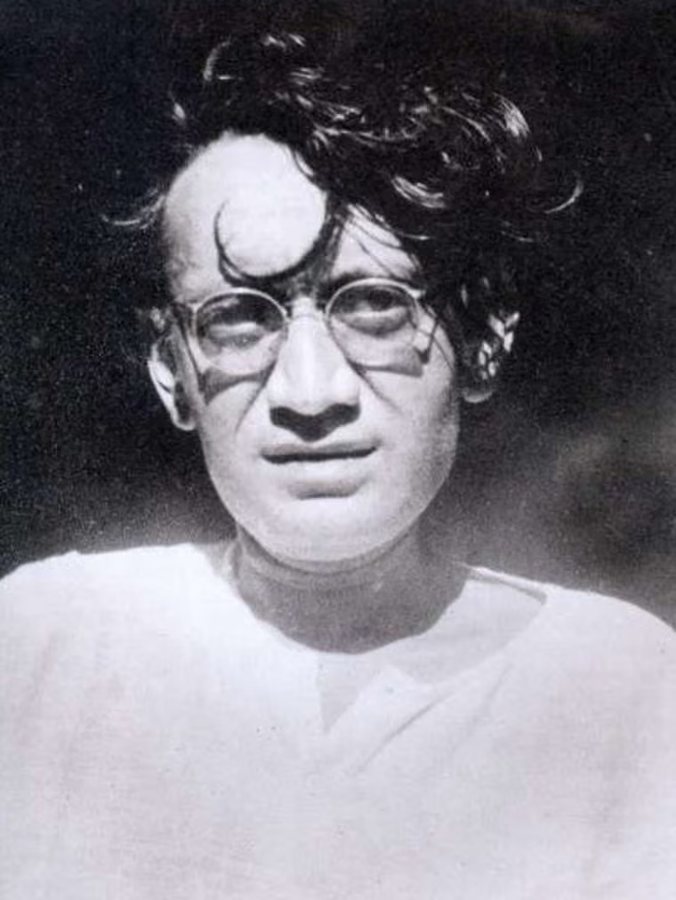
سعادت حسن منٹو
The short story writer who wrote about Partition, poverty and hypocrisy with unflinching honesty.
Life
Manto was born in Samrala, Punjab, and worked in Bombay's film world before moving to Lahore in 1948. He faced several obscenity trials, and his stories about Partition are among the strongest in Urdu.
Style and legacy
His prose is terse and ironic, and he refuses to soften the truth. Toba Tek Singh and other Partition stories are read widely, and his voice remains one of the most original in Urdu fiction.
Classic writings
Manto's short stories are often brief and sharp. He describes prostitutes, criminals, refugees and officials with an unsentimental eye, and he refuses to offer easy moral lessons. His irony is precise, and his endings often shock the reader into a new way of seeing.
His stories about Partition are among the most powerful in any language. Toba Tek Singh, about an asylum inmate who cannot accept the division of the land, is a bitter parable of madness and the absurdity of borders. Manto's Partition stories show the violence and confusion of 1947 without the consolations of a larger narrative.
Manto faced several obscenity trials in India and Pakistan. Courts were troubled by his frankness about sex, poverty and the hypocrisy of respectable society. His defence of his work was that he simply showed what he saw. The trials are part of his legend, and they helped define the limits of Urdu fiction in his time.
Manto's legacy is a fearless, compassionate and funny body of work. He is widely read in Urdu and in translation, and his voice remains one of the most original and disturbing in the language. Readers return to him for his honesty and for the sense that every sentence is weighed.
Manto also wrote sketches of the film world and of his friends in Bombay, and these pieces are full of anecdote and sharp character drawing. They show the cinema industry from inside, with its ambitions, shortcuts and vanities, and they remain lively reading for anyone interested in the history of Indian film.
His letters and essays reveal a writer who was deeply attached to his craft and who fought for the right to write about difficult subjects. His stance has made him a symbol of literary courage, and his stories continue to be read as a challenge to comfortable assumptions.
Manto's stories about Bombay and Lahore reveal a city full of contradictions. He shows the film studios and the brothels, the crowded tenements and the grand houses, and he records how people survive in each. His sharp eye and unsparing style make his cities feel real and unforgettable.
Manto's stories of Partition, including the best known pieces, present the violence of 1947 as personal and senseless. He does not explain it away with national slogans, and this refusal makes his stories hard to read but impossible to forget. They remain some of the most important literary responses to Partition in any language.
Manto wrote short stories that look straight at hard things. His subjects include the Partition, the city, and people on the edge of society, and he refused to flatter his readers. Stories such as Toba Tek Singh, Thanda Gosht and Khol Do are among the most discussed in Urdu, and they carry deep sadness along with a sharp, dark humour. He also wrote sketches of film people and essays. Because some of his work deals with violence and uncomfortable subjects, it is best read by adult readers who are ready for the subject. His influence on later Urdu and South Asian fiction is large. A newcomer might begin with a single story, read it carefully, and then decide how far to go.
Known works
Researched from published sources; the text is our own.