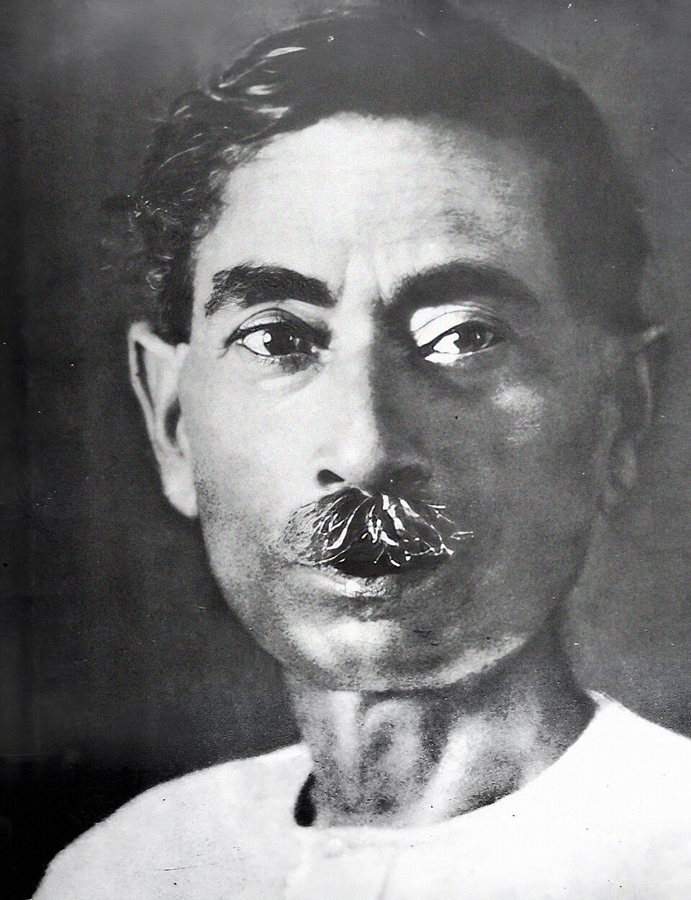
منشی پریم چند
The novelist and short story writer who began in Urdu as Nawab Rai, then wrote in Hindi, and who gave modern fiction to both languages.
Life
Born Dhanpat Rai in a village near Benaras, he began writing in Urdu under the pen name Nawab Rai. His first collection, Soz-e-Watan, was banned by the colonial government for its nationalist tone.
Style and legacy
His stories and novels portray rural and urban India with a compassionate eye. Later he moved to Hindi, and his work is read in both languages as a foundation of modern prose.
Classic writings
Premchand's stories depict peasants, teachers, clerks, widows and reformers with a compassion that never turns into sentimentality. He writes about debt, caste, marriage and the pressures of the colonial economy, and he shows how these forces shape the lives of ordinary people. His narrative style is clear, direct and full of observation.
His early Urdu collection Soz-e-Watan, banned by the colonial authorities, shows his commitment to national feeling. Later he wrote the novel Godaan, a major work on rural life and the struggles of a farmer. The book is read as a portrait of the Indian countryside and its economic hardships.
Premchand's move from Urdu to Hindi reflected the wider linguistic debates of his time. He continued to write with the same moral seriousness in both languages, and he helped to establish the modern Hindi short story. His Urdu works remain important for readers who want to see the origins of his fiction.
Premchand's legacy is among the largest in South Asian literature. He is read in Urdu, Hindi and in translation, and his stories are taught widely. His combination of social concern and humane observation makes him one of the founders of modern Indian fiction.
Premchand also wrote essays and journalism, and he edited journals that promoted literature and social reform. His essays argue for a fiction that addresses the real conditions of Indian life, and his practice shows how these ideas were turned into stories. The essays are an important part of the record of Indian modernism.
His characters are rarely heroes in the traditional sense. They are ordinary people who must make difficult choices, and Premchand treats their decisions with respect and compassion. This humane attitude is one of the reasons his fiction has been read across generations.
Premchand's stories also show his interest in education, reform and the role of women. His characters grapple with questions of duty, love and social expectation, and the author refuses to write them as simple types. The stories give a rich picture of how Indian society was changing under colonial rule.
Premchand's essays on literature argue that fiction should show the life of the people and should also be a force for their dignity. This belief shaped the stories, which avoid both easy villains and easy heroes. The result is a fiction that is critical of injustice but never cold toward the human beings caught in it.
Premchand is the great storyteller of rural and small-town India, and he wrote in both Urdu and Hindi. His early fiction appeared in Urdu, and his later stories moved between the two languages. His themes are the farmer's debt, the clerk's worries, family loyalty and the small cruelties of caste and money, told in a plain, moving style. Short stories such as Kafan, Idgah and Shatranj ke Khiladi, along with the novel Godaan, are the best known, and each can be read in an afternoon or an evening. For a reader of Urdu, he is also a reminder that Hindustani fiction was always shared. Start with a short story, since its compact form shows his sympathy and his clear eye at once.
Known works
Researched from published sources; the text is our own.