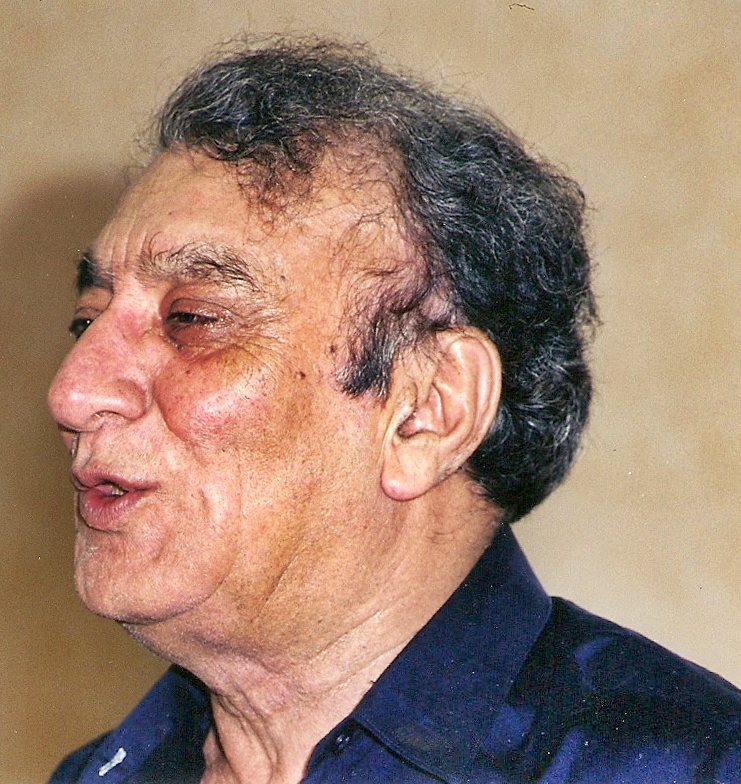
احمد فراز
A ghazal poet whose love poems and calls for conscience made him one of the most popular Urdu poets of his time.
Life
Faraz was born in Kohat and taught in Peshawar. His poetry, read at mushairas across Pakistan and India, moved between personal romance and public protest.
Style and legacy
His ghazals are direct, emotional and musical, and they speak to readers who may never have studied classical verse. His voice made Urdu poetry feel immediate for a new generation.
Classic writings
Faraz's ghazals are direct and emotional, and they speak in a voice that many readers recognise as their own. He writes about love and separation in plain, musical language, and he avoids heavy learning in favour of feeling. His couplets travel easily into conversation and song, which made him one of the most popular poets of his generation.
His poems of protest are equally powerful. Faraz wrote against censorship, injustice and the abuse of power, and he paid a price for this, facing periods of imprisonment and exile. His defiance is part of his appeal, and his verses on freedom are recited at public gatherings in Pakistan and India.
Faraz's style is accessible without being thin. He uses the traditional ghazal form and its vocabulary, but he speaks with a contemporary voice and a sense of urgency. Many readers who come to Urdu through his poems go on to explore the older tradition, and he is often credited with bringing new listeners to the ghazal.
Faraz's place in Urdu is secure. His collections are read widely, his poems are set to music, and his name is linked with a particular blend of romance and resistance. He reminds readers that poetry can be intimate and political at the same time.
Faraz also edited and translated, bringing work from other languages into Urdu and making it available to new readers. His interest in the wider world of poetry is part of his artistic identity, and it helped him see the ghazal as one tradition among many, able to borrow from others without losing its character.
His love poems in particular have a directness that many listeners find moving. The emotion is clearly stated, the image is simple, and the music is strong. This openness is one reason his poems are so often quoted at weddings, farewells and private moments.
Faraz's protest poems are often as personal as his love poems. He writes about the pain of exile and the anger of seeing friends silenced, and he does so in a voice that feels like the voice of a neighbour. This closeness makes his political verse feel urgent rather than distant, and it explains why his lines were carried so widely.
Faraz's ghazals on the pain of separation often combine personal grief with a wider sense of loss. He writes about friends who have gone, cities that have changed and the sadness of a world that seems to have forgotten its own ideals. These themes give his love poetry a social depth.
Ahmad Faraz is loved for lines that feel like they were written for the listener. His ghazals are direct, romantic and easy to remember, and his protest poems carry a quiet courage. Many of his verses became songs and recitation favourites, and his name is often heard at mushairas where he was a favourite guest. Because his lines are so widely shared, many verses falsely credited to him circulate online, so a reader benefits from a reliable printed collection. A few of his love poems and a few of his poems of resistance make a good first sample. Together they show a poet who could be tender with a sweetheart and firm with the powerful, in the same clear voice.
Known works
Researched from published sources; the text is our own.