When we were small we ran home from the bonfire shouting the old rhyme, so the tailless black sow would not take the last one. Elin was always slow.
Adref, adref, am y cynta’,
Hwch Ddu Gwta gipio’r ola’.
Home, home, be the first one in. The tailless black sow takes the last.
You didn’t so much learn it as find it already in your mouth. Every child in Bryn Llechi knew it the way you know your own phone number. We shouted it on the last night of October, every year, running down off the slate tips in the dark from the coelcerth, the big bonfire the men built up there out of pallets and old doors and anything the quarry didn’t want. We shouted it at the tops of our voices and we ran like hell. I’ve run a fair few fell races since and I have never once run as fast as that.
* * *
The bonfire was the best night of the year. Better than Christmas. Your mam gave you a potato wrapped in foil and you pushed it into the edge of the embers with a stick and burnt your fingers getting it out. The older boys let off rockets sideways. And when the fire was at its biggest, everyone took a white stone off the tip, a bit of quartz or a pale lump of slate, and scratched their initials on it with a nail and threw it into the flames. You went back up the next morning and found your stone in the ashes. If it was there, you were fine for the year. If it wasn’t, you weren’t.
My taid told me that. He told it the way he told everything, as if he didn’t really believe it and you’d be a fool not to.
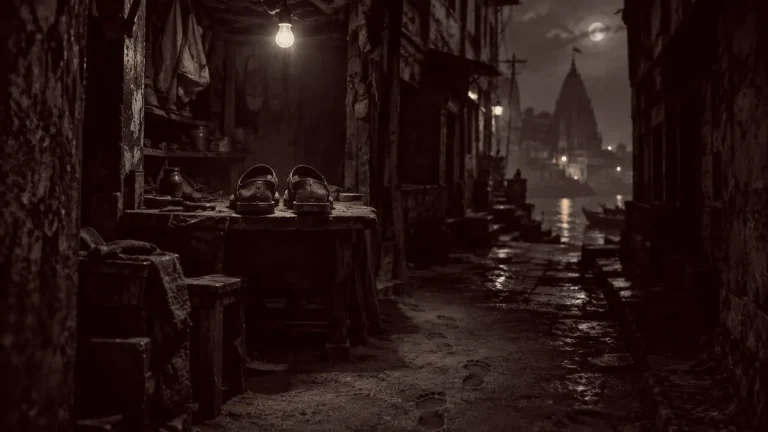
Then the fire went down to red, and somebody would shout, and that was it, everybody running. The road off the tip comes down in zigzags between the waste heaps, blue-grey slate piled up either side higher than a house, and in the dark you could hear everybody’s feet on it, that sound slate makes underfoot, like breaking plates. You didn’t look back. That was the rule. You ran and you shouted and you didn’t look back, because the Hwch Ddu Gwta came down off the tips behind the last child, and if you saw her, you’d stop, and then you’d be the last.
Elin was always nearly the last. She was small for eleven, and she wore her brother’s wellies that were too big, and she laughed when she ran, which slows you down. I used to wait for her at the bottom of the third zigzag. Every year. I’d be shouting Dere, dere, Elin, dere, hopping, and she’d come clattering down out of the dark in those wellies, red in the face, laughing her head off, and we’d run the last bit holding hands.
The year we were eleven, I didn’t wait.
I’ve told myself a lot of reasons. There was a boy in the year above I wanted to be seen running with. I’d had a row with her about something, I don’t even know what now. My mam had said to be home by nine. All true, probably. But the real reason is that I heard something behind me on the slate, near the top, that wasn’t wellies, and I put my head down and ran.
It was a quick, light sound. Clicking. Like somebody tapping two spoons together, very fast.
I got home first. I was so proud.
* * *
They looked for her for nine days. The mountain rescue, the police, the divers. Men from the quarry who knew every level and tunnel. They found one red welly at the lip of the Twll, the big flooded pit at the top of the old workings, three hundred feet of sheer slate down to green water. The police said she’d gone the wrong way in the dark, missed the zigzag, gone over. The divers went down as far as divers can go in there and found nothing, but they said that wasn’t unusual, the Twll’s deep as a cathedral underneath and full of old machinery.
In the morning, the morning after, I’d gone up to the ashes for my stone, the way you did. I found mine. F.R., in my wonky capitals. I looked for hers a long time, until my mam came up and fetched me.
I didn’t tell anybody about the clicking. Who would I tell? I was eleven. And there was a sound I’d heard right at the end, as I came round the last bend with the lights of the village in front of me, that I didn’t want to think about. Elin laughing, up behind me in the dark, and then the laugh going on a bit too long, and changing, and turning into the rhyme. In her voice. Slowly. As if she was being taught it.
We moved to Bangor the next summer. Then I went to university in Manchester and I stayed.
* * *
Twenty years. I’m a physio. I’ve got a flat in Levenshulme, a cat with one ear, and a climbing habit I can’t really afford, and for four years now I’ve been in the Thursday club, a mixed bunch who climb at the wall in winter and go to the Peak and North Wales when the weather lets them.
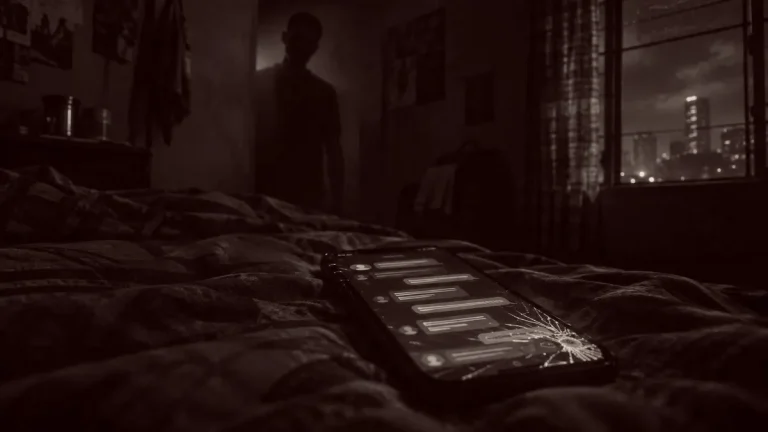
I didn’t pay much attention when Dafydd put the trip in the group chat. Dafydd’s the leader, sort of. He’s from Wrexham, which he likes to remind us makes him Welsh, and he organises everything with a spreadsheet and a lot of exclamation marks. Halloween night climb!! Slate quarries!! Headtorches, short routes, bonfire and sausages after, who’s in?? Eight people said yes. I said yes before I’d even looked at where it was.
When I did look, I read the name three times. Then I went and stood in the kitchen for a while with the kettle not on.
I could have pulled out. I didn’t. I think part of me wanted to go up there as a grown woman with a rope and a headtorch and look at it, and see that it was just a hole in a mountain. I didn’t tell anyone in the club I was from there. They all think I’m from Bangor.
* * *
The new girl was Cerys. She’d joined about a month before, came along to the wall on a Thursday and was better than all of us straight away, light and quick, the way some people just float up things. Quiet. Nice enough. A bit odd. She wore a really old fleece, the kind with the zip pocket on the chest that nobody’s made since the nineties, and she never seemed to eat. She asked me on the drive down where I was from, and I said Bangor, and she said, “Oh, not Bryn Llechi then?” and I said no, and she smiled and looked out of the window.
We parked the van in the lay-by at the bottom of the old incline at nine. There’s a car park there now, with a sign about the history of the quarry and a picture of men in flat caps. We walked up in a line with our headtorches bobbing. The zigzag road was still there. Smaller than I remembered, the way things are. Nobody builds the coelcerth up there any more, the council stopped it after Elin. But I could see down in the village there were fires in back gardens, little orange points, and somebody was letting off fireworks over the school.
Dafydd had picked a route down in the Twll itself. You get in by an old tunnel the quarrymen cut through the wall of the pit, which comes out on a ledge maybe forty feet above the water, and from the ledge there are a few bolted lines going up the slabs. It’s a popular spot in summer. Climbers love the Twll. They’ve got a name for every wall.
I hadn’t known that. I hadn’t known people came here for fun.
* * *
I was halfway up my route when I heard it.
It’s beautiful climbing, slate, I’ll say that. Thin and technical, little edges, and in the headtorch the rock shines blue and silver. I was concentrating, I had my nose against it, and Dafydd was belaying me from the ledge and chatting to somebody, and then underneath all that, underneath the voices, I heard the clicking.
Quick, light. Two spoons. On the scree at the far side of the ledge, where there’s no path, where there’s nothing but loose slate going down into the water.
I stopped. My feet were on two tiny edges and I felt my calves start to shake.
“You all right, Ffi?” Dafydd called. “Looking solid!”
And then, very clearly, carrying the way voices do over water in that pit, a child’s voice, chanting. Not shouting it the way we used to. Saying it slowly, like a lesson, like somebody repeating after a teacher.
Adref, adref, am y cynta’.
“Who’s that?” somebody said on the ledge. “Is there someone down there?”
I said, “Lower me.”
“What?”
“Lower me down, Dafydd. Now. Please.”
He did, God love him, though he was laughing a bit, thinking it was a Halloween wind-up. I got down onto the ledge and I didn’t untie properly, I just pulled the knot apart with my hands shaking and dropped the rope, and the others were all looking at the far end of the ledge with their headtorches, and their beams were going over the loose slate and finding nothing, and the clicking was there. Moving. Coming along the scree in the dark, at the edge of the light, never in it.
Hwch Ddu Gwta…
I said, “Get to the van.”
I don’t remember how I said it but they all went. Something in my voice. Through the tunnel, out the other side, onto the zigzags, all of us running in our harnesses with the gear clanking. One of the lads was still laughing. Then he stopped laughing, because he heard it too, behind us, on the road. That quick light sound on the slate, keeping up.
I ran. I didn’t look back. I passed Dafydd on the second zigzag and I passed two others on the third, and I was eleven again and I was not going to be last, I was never going to be last. I got to the van first. I got in first. I sat in the back seat with my knees pulled up and I counted them in. Dafydd. The two lads. The couple from Stockport. Joanne. Seven.
And then the eighth. Cerys, last, climbing in easily, not even out of breath. She pulled the sliding door shut behind her and the noise outside stopped as if somebody had turned it off.
Dafydd was laughing and swearing and trying to get the key in the ignition. Everybody was talking at once. Cerys sat down in the seat next to mine. She smelled of woodsmoke, strong, the way your hair smells the morning after a bonfire.
“You didn’t wait,” she said. Quietly, so only I could hear. “At the third zigzag. You always waited.”
I looked at her. In the light from the dashboard her face was just Cerys’s face, thin and pleasant and a bit odd, thirty-something. But she was smiling up at me from under her fringe, the way you smile at somebody bigger than you, and she had her hands pushed into the sleeves of her old fleece, the way a child does when the sleeves are too long.
“Do you still remember the words, Ffi?” she said.
Then she said them. Not loud. In a voice I hadn’t heard for twenty years and had heard every last night of October since, in my sleep. An eleven-year-old’s voice, a bit hoarse from shouting, with that little laugh in it.
Adref, adref, am y cynta’.
And she waited, smiling, for me to say the second line.