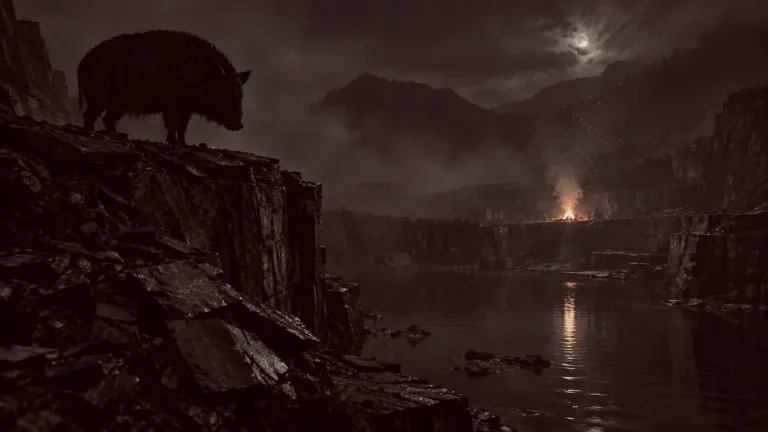
In Varchi Wadi we left new chappals for Vetoba every Shimga, because he wore the old ones out walking our boundary. Then Raghu Sawant came home from Dubai.
Every Shimga we left Vetoba a new pair of chappals. Leather ones, big, the size a man would need if he were twice a man’s height, made by Bapu the cobbler in Rajapur from one whole hide. We left them under the tamarind at the edge of Varchi Wadi, by the stone, and by the next Shimga the soles would be worn through at the heel. Everybody knew why. Vetoba walked our boundary every night with his stick, round and round the wadi, so that nothing could come up from the river while we slept. That is a lot of walking. Ajoba says a pair of chappals a year is cheap.
This is how it was told to us, and this is how we tell it.
The tamarind was older than the temple and older than the Sawants’ house, which was the oldest house. Its trunk was so wide that four of us could not join hands around it, and we tried, as children, in the day, laughing, and then let go and ran. Under it was the stone. Not a statue. A stone, the height of a child, roughly a man’s shape if you wanted it to be, smeared all over with shendur so thick and old that it had built up like the layers on a cake. Every Tuesday somebody’s grandmother put fresh shendur on it with her thumb. A coconut. A few flowers. A brass bell hung from the lowest branch and nobody rang it after dark.
That was the rule. You did not sit under the tamarind after dark. You did not take its fruit after dark, though it was the sourest and best tamarind in the taluka, and women came from three villages to beg it in the season. You did not cut it. You did not let your goats strip it. If you were walking home late from the bus stand at the main road, you said “Vetoba, Vetoba” under your breath as you passed, and you did not look up into the branches, because if he was sitting there resting his feet he did not want to be looked at.
We were a hundred and forty-two people in Varchi Wadi the year Raghu Sawant came home.
* * *
He had gone to Dubai at nineteen with one bag and his father’s debts. Bhiku Sawant, his father, sold dried fish at the Saturday market and drank most of what he made, and when Raghu left, we said what people say. That he would not come back. That the Gulf eats boys. Ajoba said he would come back, because his mother was buried here, and men always come back to their mothers.
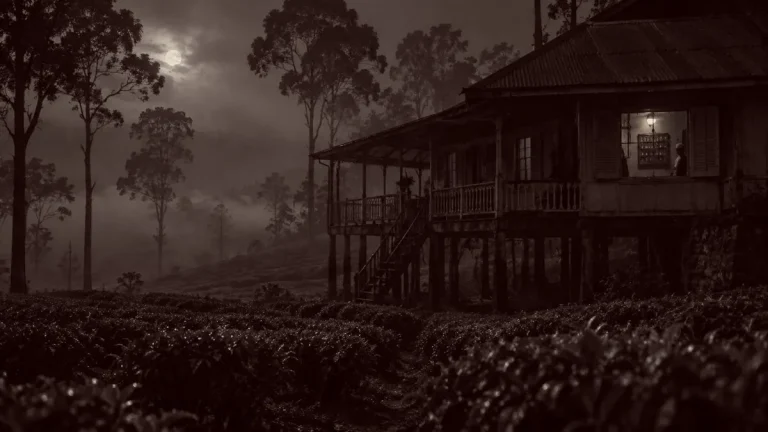
He came back at forty-six in a white Fortuner with Dubai plates still in the back window, and a wife in jeans who didn’t get out of the car for the first hour, and two children who spoke English to each other and Hindi to us and no Marathi at all. He paid off his father’s debts in one afternoon. He rebuilt the house in pink and white with a terrace on the top. He gave every child in the wadi a box of Kaju Katli. We liked him very much.
Then he came to the temple meeting with an iPad.
“Eco-resort,” he said. He turned the screen round so we could see. He had drawings. Twelve cottages with red-tile roofs in a curve down the slope, where the Patils’ cashew trees were. A restaurant on stilts. A swimming pool at the edge of the hill that seemed to spill straight over into the view, the river below and the sea beyond it, silver. “Infinity pool,” he said. People from Pune and Mumbai would pay eight thousand a night for this view. There would be jobs. Cooks, cleaners, drivers, gardeners, guides for the nature walk. Our boys wouldn’t have to go to the city. Our girls wouldn’t have to marry out.
It was beautiful. We were quiet, looking at it. Then old Nana Kadam said, “Where’s the tamarind?”
Raghu swiped. A drawing of the driveway. A wide curve of new cement road coming up from the main road, between rows of little lamps, to the resort gate. Exactly where the tamarind stood.
“We’ll move Vetoba,” he said. “Properly. With full puja. I’ll build him a proper temple, tiles, a roof. He’s been sitting in the rain for three hundred years. He deserves better.”
We said no.
We said it all together, the whole meeting, the way the river comes over the bund in Shravan, without anybody deciding. Ajoba stood up on his bad knee and said no, Raghu-bala, no, sit down, have tea. Raghu sat down and had tea and smiled and said, of course, of course, it’s your decision, it’s the village’s decision, and he put the iPad back in its cover.
* * *
We should tell the next part honestly. It is the part we are least proud of, and if we tell it wrong it will be a lie.
He didn’t argue. He just started paying for things.
The school roof, which had leaked into the third standard for six years. A new borewell, with a pump, so the women didn’t have to walk to the well at the bottom of the hill in May. Kadam-kaka’s cataract operation in Kolhapur. The Gaikwads’ daughter’s wedding, all of it, the hall and the band and four hundred plates. He didn’t put conditions on anything. He never mentioned the tamarind. He sent a man around with forms to sign for “future employment registration” and we signed, because why not.
And then, in Jyeshtha, he called another meeting and offered fifty thousand rupees to every household. Not for the tree. “For the inconvenience of construction,” he said. Dust, trucks, noise. Fifty thousand. Some of us had never seen fifty thousand in one place.
Ajoba’s grandson Sandeep was in the hospital in Ratnagiri that month with something wrong in his kidney, and the bill was already more than the house was worth.
We said yes. Ajoba said yes too. He said it last, and quietest.
* * *
No one from the wadi would cut it. Raghu brought a crew from outside, from somewhere past Chiplun, men who didn’t know whose stone that was. They came in Ashadh, in the heaviest rain we’d had in ten years, rain so thick you couldn’t see the main road from the bus stand, because Raghu wanted the driveway poured before Ganpati and he was already behind.
We didn’t go to watch. We heard it, from inside our houses, with the doors shut. The chainsaws, coming and going in the rain, all afternoon. Then a crack so loud that the Sawants’ new terrace windows rattled. Then a long tearing, and a sound like a building falling down, and the ground under our feet jumped once, the way it does when a truck goes by. The brass bell, which had hung from the lowest branch for longer than anyone remembered, was found in the mud the next morning with its tongue missing. We never found the tongue.
The stone Raghu kept his word about. The pujari came from Pawas and did a full puja, two hours, and four men lifted Vetoba with ropes and carried him to a new little temple by the resort gate, white tiles, a pink roof, a light that came on by itself when it got dark. The pujari smeared the stone with fresh shendur and took his fee and ate lunch with Raghu. Somebody put new chappals by the step. It looked very nice. You could see it from the road.
* * *
And for two years, nothing happened except good things. We have to say that too.
The resort opened in Kartik. They called it Tamarind Hill, which some of us thought was a joke and some of us thought was respect. The guests came, as Raghu said they would, in SUVs, in families and in couples, taking photographs of everything. Our boys got jobs as drivers and our girls in the restaurant and the office. Sakhubai’s son Ganesh learned to make cappuccino. There was a bakery at the bus stand by the next year. There was Wi-Fi. Kadam-kaka could see again. Ajoba’s grandson Sandeep came home from Ratnagiri and got a job in the resort kitchen and put on weight.
The new chappals at the little temple did not wear out. We noticed that. Nobody said anything about it. They sat on the white tile step by the gate, the whole of the first year, without a mark on them, and the next Shimga someone put another pair beside them, and those didn’t wear out either.
* * *
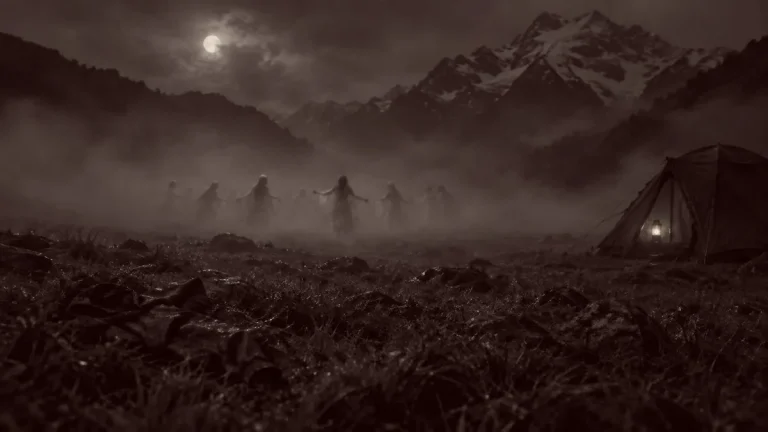
It was Sakhubai who found it first. The third monsoon, a Tuesday in Shravan.
She went out at five in the morning to sweep her courtyard and there it was, by her tulsi. Vetoba’s stone. The height of a child, the shape of a man if you wanted it to be, with shendur on it so fresh it was still wet and running in the rain, red streaks down to the mud. Nobody had carried it. It would take four men to carry it. There were no marks in the mud from the gate. Just the stone, by the tulsi, wet.
She screamed for Ganesh and Ganesh ran up to the resort and came back saying the little temple by the gate was empty, the light still on inside it, the two pairs of new chappals still on the step.
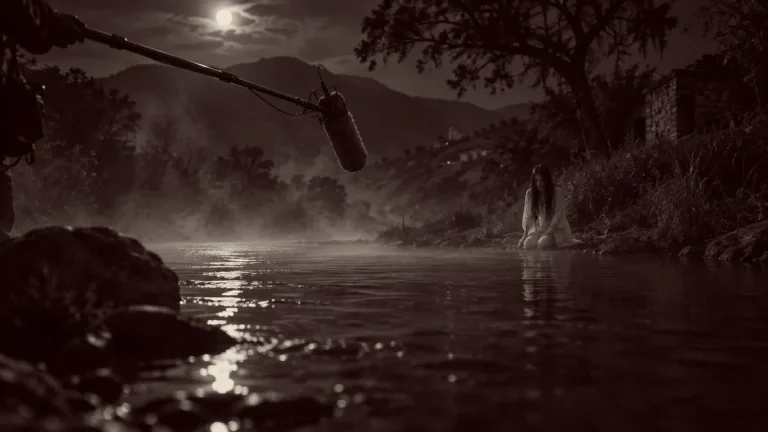
We carried him back, four men, with ropes, saying his name, and we put fresh shendur on him and broke a coconut. Sakhubai sat on her doorstep all day with her hands in her lap and didn’t speak. In the evening, while the rest of the house was eating, she got up and walked out of the courtyard and down the hill, past the bakery, past the bus stand, down the path to the river, which was in flood. Ganesh ran after her. He said she wasn’t running. She was walking quite slowly, in her bare feet, the way you’d walk to the well. She walked straight into the brown water up to her waist, up to her chest, and it took her.
The next morning the stone was in the Patils’ courtyard. That evening Vinayak Patil walked into the river.
The morning after that, the Mores’.
* * *
We will not tell you all of it. We have told it enough times now, to the police from Rajapur, to the tehsildar, to a doctor from Ratnagiri who sat in the temple with a laptop and asked us whether we had been sleeping, whether there had been any recent stress in the community. To a television channel from Mumbai with a girl in a raincoat who said the words “mass hysteria” four times in two minutes, standing exactly where the tamarind had been, on Raghu’s driveway, with the resort lights behind her.
One house a night. Not every night. Some weeks we’d go five days and start to breathe, and then someone would go out to sweep and there it would be. We tried everything. We put him back. We chained him to the new temple’s pillar with a bicycle chain and he was in the Gaikwads’ courtyard by morning with the chain still locked and the pillar cracked through. We sat up at night, whole families, round lamps, and the stone still came, and in the morning whoever had found it would sit quietly all day and in the evening get up and walk to the river. You could hold them. People did. They’d stand very patiently while you held them, looking at the river, and the moment you let go to sleep or to cry, they’d go.
Ajoba says it is not anger. He has thought about it a lot and he says it isn’t. He says Vetoba has no tree to sit under now. He has walked our boundary for three hundred years and every night he rested his feet under that tamarind, and now there is nowhere to rest, and he is tired. So he’s taking one of us at a time to walk with him. Down to the river and along it. Keeping out whatever it is that comes up from there.
Ajoba says somebody has to keep the boundary. We sold it. Now we walk it.
* * *
The resort is full. That’s the last thing. Tamarind Hill is full every weekend from June to February, and Raghu has built four more cottages on the slope past where the Kadams’ house was before they left. The girl in the raincoat’s video went everywhere, and now people come from Bangalore, from Delhi, to stay in the haunted Konkan village. They walk down the driveway at night with their phone torches and take selfies in front of the little white temple with the light on and the three pairs of new chappals on the step. The Google reviews say peaceful. They say so much character. The stone has never once come to Raghu’s courtyard. Raghu doesn’t sleep in the pink house any more. He has a villa up at the resort, past where the tamarind stood, on the far side of the line Vetoba walked. We sold him that line ourselves.
This morning Ajoba found it by his tulsi.
He has gone in to bathe and put on his good dhoti and his white cap, and he has asked us to finish this for him, so that it is told properly, and told in order, so we are finishing it.
There were a hundred and forty-two of us in Varchi Wadi the year Raghu Sawant came home. This evening, when Ajoba has walked down to the river, we will be fifty-eight.