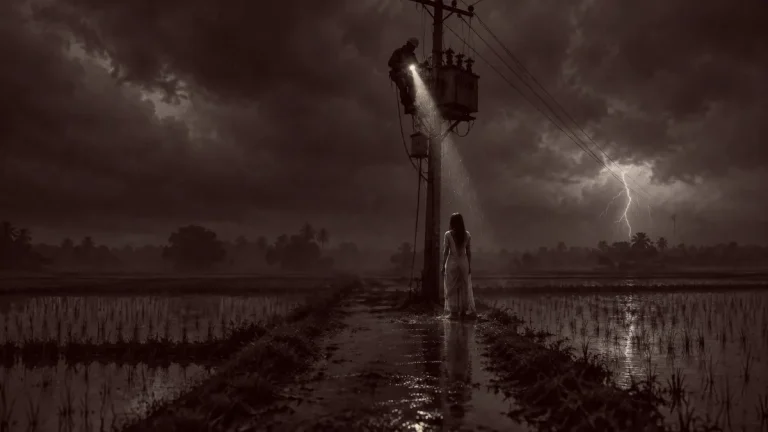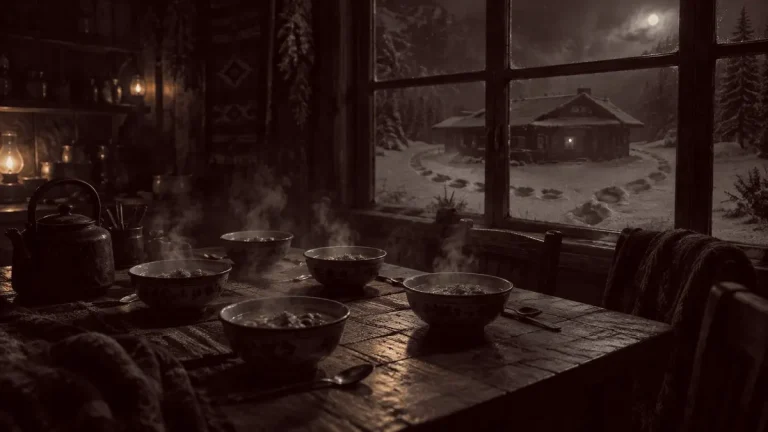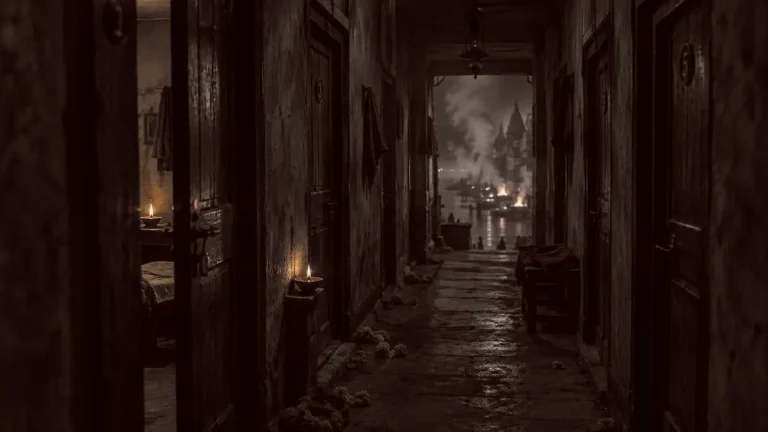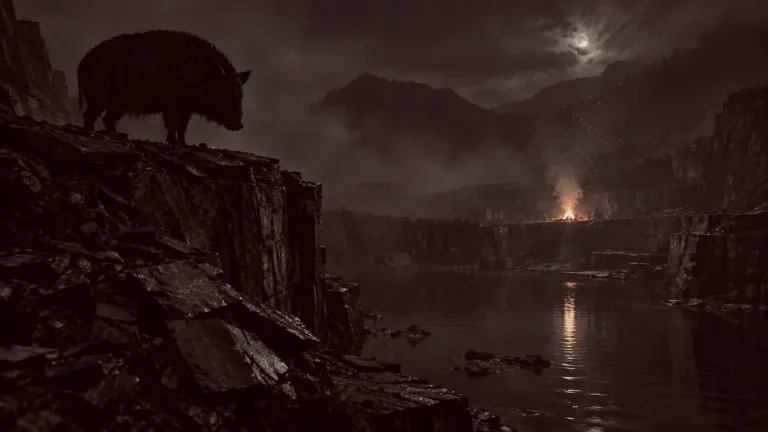
A new assistant manager, a 1919 planters' bungalow, a bell board that rings for rooms with no bells, and an old ledger that keeps adding lines overnight.
From: Rishav Baruah
To: Tinku
Thursday 3 July, 10:52 p.m.
Subject: alive
Tinku,
Alive. Reached. The car from Dibrugarh took four hours for a hundred and twelve km because the driver stopped twice for paan and once to have a long conversation with a man holding a goat. Ma has already called three times to ask whether I have eaten, so you can tell her yes, I have eaten, and what I ate was rice, masoor dal, aloo pitika with so much raw mustard oil it went up my nose, and a fish curry that the cook, Pushpa, says is “light”. Pushpa is maybe fifty, wears a man’s wristwatch on the inside of her wrist, and has already told me that I am too thin for a manager and that the last assistant manager was also too thin and look what happened to him. When I asked what happened to him she said he was transferred to Cachar. So that’s the scariest thing so far.
The bungalow. You asked for photos, I’ll send in the morning. The network here comes in through exactly one spot on the verandah, next to the third pillar from the steps, if you stand on the top step on one foot. That’s where I’m writing this. Mosquitoes are writing their own email on my ankles.
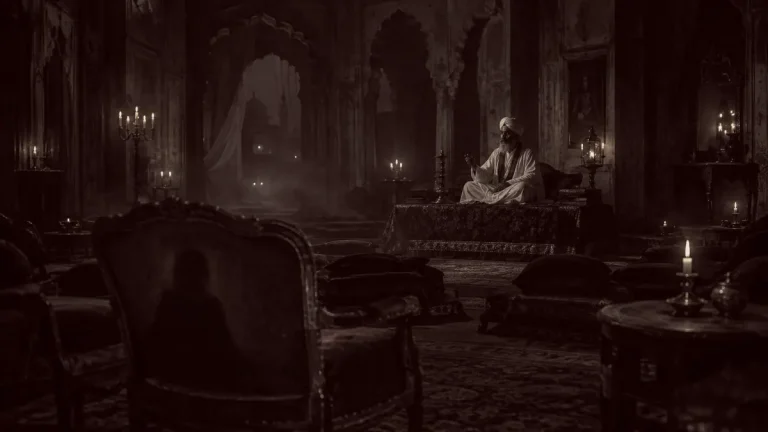
It’s Bungalow No. 3. Built 1919 according to the plaque, which some genius painted over in green so you can only read it with your fingers. On stilts, all wood and tin, a verandah round three sides, rooms so big my voice comes back to me. The ceilings must be eighteen feet. There’s a punkah over the dining table, the old kind, a long wooden frame with a cloth fringe gone the colour of tea, and the rope that used to pull it runs through a little hole in the wall out to the back verandah, where some poor fellow used to sit all night pulling it so the sahibs could sleep cool. The rope is cut off now at the hole. Mr. Goswami (burra sahib, very nice, moustache like a broom) says the Company keeps the punkah “for heritage”. I think the Company keeps it because taking it down would cost money.
Best thing in the house: in the pantry, behind the kitchen, there’s a bell board. A glass-fronted wooden box high on the wall, with a row of little brass bells and flags behind the glass and the names of the rooms painted under each one in white. DRAWING. DINING. BED 1. BED 2. BED 3. OFFICE. NURSERY. VERANDAH. In the old days each room had a bell pull. You tugged it, a bell rang in the pantry, and the flag for that room dropped so the bearer knew where to run. The pulls are all gone, Pushpa says they took them out when the electric came. So now it’s a box of bells with nothing attached to them. I tapped the glass and one bell went ting, very softly, and I felt like a sahib for about two seconds and then I felt like an idiot.
Deuta will say this is the family business coming back. His grandfather was a garden babu somewhere in this district. He never knows which garden, it changes every time he tells it. You know the story. “Your koka’s father kept the books of a whole garden with one pen.” Now his grandson has a bungalow with a punkah. Progress.
Tomorrow I start properly, out at six to the section with the field staff. Go to sleep, it’s late even for you.
R
* * *
Saturday 5 July, 9:30 p.m.
Subject: re: re: alive
No, I am not lonely. I have a cook, a chowkidar, a mali who comes on Tuesdays, two dogs that belong to nobody and about four thousand frogs. The frogs are the loudest thing in upper Assam.
The chowkidar is Somra. He is old. Properly old, not uncle-old. Thin like a stick of firewood, white stubble, a shawl even in July, and he sits on a stool at the bottom of the back steps all night with a torch, a lathi and a radio that only plays static. Pushpa says he’s been chowkidar of No. 3 since before she was born. I asked him how long and he said “Bahut din,” which is what everybody here says about everything. His father was chowkidar before him. His grandfather “pulled the pankha.” He pointed at the hole in the wall where the rope comes out. I said oh, so your family has been in this house longer than any manager. He looked at me like I’d said something stupid, and then he said yes.
Pushpa goes home at six sharp. Not six-fifteen. She leaves my dinner in a tiffin on the table with a plate over it. I asked if she wants to stay and eat, I said I’ll drop you on the bike after, and she said “Nai, sir” in a way that closed the subject. So I eat alone at a table for twelve under the punkah. Very Downton Abbey. You’d hate it.
Work is fine. I will tell you about work when there’s something to tell. Mostly it’s walking behind Mr. Goswami while he says things like “this section is very nice, very nice bushes.”
One funny thing. Last night around one the bell board rang. I was awake, reading, and I heard it from the pantry, a single ring, very clear, like someone had pulled a cord. In the morning I went to look and the flag under DINING had dropped. I told Pushpa and she reset it with a little stick she keeps on top of the board, like she’d done it a thousand times. “Hawa,” she said. Wind. In a closed glass box. Okay, Pushpa.
Send me photos of your new flat. And tell Ma to stop forwarding me things about leeches.
* * *
Monday 7 July, 11:48 p.m.
Subject: the trunk
Okay, this is actually interesting, and you’re the only person I know who’ll find it interesting and not ask whether it’s worth money.
The room I sleep in is BED 2 (I checked the board, I’m a professional). Off it there’s a little box room with a high window, full of junk: broken cane chairs, a gramophone horn, a stack of Illustrated Weekly from 1968, and under all that a black tin trunk with K.T.E. painted on the lid. Not locked. Inside, wrapped in a gunny bag and then in oilcloth that crackled like a papad when I opened it, there was a ledger. Big, heavy, cloth spine, marbled edges. On the first page in copperplate: Kordoiguri Tea Estate. Coolie Advance & Recovery Book. 1921 to 1926.
Tinku, it’s every labourer they brought up here in those years. Name, father’s name, district (Ranchi, Hazaribagh, Ganjam, Bankura, Santal Parganas), date of arrival, and then the “advance”, which was the money they were supposedly given when the arkatis signed them up, plus the train fare and the steamer fare and the food on the journey, all written down as owed. Then week by week, deductions. Two annas. Three annas. One anna six pies. And in another column, “fines”. Late at muster, 2 annas. Short leaf, 4 annas. “Insolence”, 8 annas. You can follow one person for five years and watch the debt go down a little and then go up again because they got sick, or got married, or a child was born (they charged for the child’s rice). Some lines just stop with one word in red. Absconded. Died. And then, this is the bit, Balance to widow. Balance to son.
Every page is signed at the bottom. H. Baruah, Garden Clerk.
I know. I KNOW. Don’t tell Deuta yet, he’ll be on the next train with a camera. It’s a common enough name, there must have been a hundred Baruah babus in these gardens. But I sat on the floor of the box room for an hour with my phone torch and read names. Lachmi Oraon, arrived 1922 with her husband Budhu, both from Ranchi district. Budhu died in 1923, cause not given. His balance, Rs. 41-6-0, moved over to Lachmi’s line in the same neat hand. She worked it down to Rs. 9 by 1926 and then the book ends.
I’m going to photograph every page and write to somebody at the archives in Guwahati. This should be in a museum, not under a gramophone.
The board rang twice tonight. BED 3 and OFFICE. I didn’t get up.
* * *
Thursday 10 July, 12:20 a.m.
Subject: (no subject)
You’ll laugh. Fine, laugh.
I photographed every page of the ledger on Monday night. Eighty-eight pages, the last one half full, last entry dated 31st December 1926. I have the photos, they’re on my phone, I’m looking at them now.
Tonight I opened the book again to check a name for my archives email and there are three new lines after the last entry on that page. Same columns. Same copperplate, or almost, a little shakier. The ink is brown and very faint, like it’s already been there a hundred years, but it wasn’t there on Monday, because I have a photo of that page and the bottom half is blank.
The new lines say:
Lachmi Oraon. Bal. b/f Rs. 9-2-0. Ded. 1 anna.
Somra Kharia, s/o Etwa. Bal. b/f Rs. 112-0-0. Ded. 1 anna.
Pushpa Bhumij. Bal. b/f Rs. 31-11-6. Ded. 1 anna.
The date column on all three says 8th July. No year.
I asked Pushpa this evening, very casually, if she knew anyone called Lachmi. She was putting the tiffin on the table. She said her husband’s grandmother was Lachmi. She said it like I’d asked her the time. Then she asked how I knew the name and I said I read it somewhere, and she looked up at the punkah, not at me, and left ten minutes early.
So. Either someone in this house is getting into the box room at night and doing calligraphy (who?) or I’m not sleeping enough and I’ve misread my own photos. I’ve checked the photos four times. Tinku, the page was blank.
Don’t tell Ma.
* * *
Friday 11 July, 1:05 a.m.
Subject: re: are you okay
I’m fine. Thank you for the long reply. No, I’m not going to “film it for content.”
You asked about Somra. I showed him. I’m sorry, I know you said leave it, but I took the book down to the back steps tonight while he was on his stool and showed him the new lines with the torch. He didn’t touch it. He read his own name (he can read, slowly, his lips move) and his father’s, Etwa, and then he looked out past the steps for a long time, at nothing.
I said, Somra, who is writing in this.
He said, “Bungalow hisab rakhta hai, sir.” The bungalow keeps accounts.
I said what does that mean. He said that’s all. That’s what his father told him and what his grandfather told his father. The bungalow keeps the accounts. When the garden was sold in ’58 the new owners burned all the old books in the factory furnace, except this one, because nobody could find this one, and when it turned up years later in this trunk a manager tried to burn it and it wouldn’t take. He said it the way he’d tell me where the spare gas cylinder is kept. Then he said, “Rakh dijiye, sir. Jahan tha.” Put it back where it was.
I asked about the one anna. Somra said, “Roj ek anna.” Every day, one anna. Paid in work. I asked what work, there’s no work at night, and he looked at the hole in the wall where the punkah rope comes through and didn’t say anything else. When I went back in I noticed that the end of the rope, the bit that pokes out of the hole and is cut off, was swinging. Very slightly. Like it had just been let go.
There’s no wind on that side of the house. I checked. I stood in the dining room for twenty minutes and the fringe on the punkah didn’t move and the rope end didn’t move again either.
I’m putting the book back in the trunk. I’ll sleep in BED 1 tonight, it’s further from the box room.
* * *
Monday 14 July, 11:15 p.m.
Subject: the adding
You asked what I’m doing with my evenings. I’m adding.
Commerce graduate, remember. Two years of audit in Pune before I came here for the “romance of tea”. So on Saturday, because I couldn’t stop thinking about it, I sat with the photos of the original pages and a calculator and checked H. Baruah’s arithmetic. Lachmi Oraon’s line first. Five years of weekly deductions.
It’s wrong.
Not hugely. Every few weeks the balance carried to the next line is a little more than it should be. Two annas. Three pies. Once a whole rupee, the week her husband died. Always in the garden’s favour. Not once the other way. I checked Etwa’s line and it’s the same. I checked twenty lines. Twenty out of twenty. Over the whole book, five years, three hundred and something people, the clerk was adding to their debts every single week, a few annas at a time, the way you’d skim milk.
Whoever H. Baruah was, he couldn’t add. Or he could add very well.
I didn’t sleep in BED 1 after all. The board rang for BED 1 at 2:10, and BED 1 is the room I was lying in, and there is no bell pull in it. There is a darker rectangle on the wallpaper by the bed where a pull used to hang. I was looking at that rectangle when the bell rang in the pantry. The flag was down in the morning.
I’ve started leaving the pantry light on.
Tinku, can you do something for me. Ask Deuta, without making it a thing, if he knows his grandfather’s first name. The garden babu one. Say it’s for a family tree. He’ll love that.
* * *
Wednesday 16 July, 12:40 a.m.
Subject: re: re: the adding
Haren.
Okay. Okay. Thank you for asking him. Did he say which garden? You said he said “somewhere near Moran”, which is twenty km from here, which is nothing.
There are more lines in the book every night now. I stopped putting it back in the trunk because I wanted to see if they’d appear while I watched, and they don’t, they come when I’m not looking, but they come. Every name from 1926 has a new line now, a few more each night, all dated July. Bal. b/f. Ded. 1 anna. Three hundred and twelve names, and they’re working it off, every one of them, a day at a time.
That’s what the bells are. I’ve worked it out. It isn’t the house ringing for a bearer. It’s the other way round. They’re on shift. Every night the house rings for them, room by room, the way it did a hundred years ago, and they come, and somebody pulls the punkah over the dining table all night, and in the morning it’s written down. One anna a day. Lachmi had nine rupees two annas left. That’s a hundred and forty-six days. She’ll be done by December. Somra’s line, the Rs. 112 that came down to him from Etwa, will take him nearly five years. I asked him how old he is. He doesn’t know. He thinks eighty.
Pushpa’s line is new. Her husband died in March. Look at the book, Tinku. Bal. to wife.
I want to tell you I’m being dramatic. I want you to tell me I’m being dramatic.
* * *
Friday 18 July, 2:30 a.m.
Subject: (no subject)
Got up when it rang tonight. Went to the dining room.
The punkah was moving.
Not wind. A pull, a stop, a pull. The frame swinging back and forth over the table, the fringe lifting, and out on the back verandah (I went round with the torch) the cut end of the rope was going in and out of the hole in the wall as if somebody on the outside had hold of it. There was nobody. Somra was on his stool at the bottom of the steps, ten feet away, facing out into the dark the way he always does. I said his name and he said, without turning round, “Andar jaiye, sir. Inka kaam hai.” Go inside. It’s their work.
I sat at the table under the punkah until it stopped at 4:50. It was cool. That’s the worst part. It was lovely and cool.
* * *
Sunday 20 July, 11:02 p.m.
Subject: re: CALL ME
I can’t call, there’s no signal inside the house, you know this.
I’m okay. I’m eating. Pushpa is eating here now. She started staying after dark on Thursday without either of us saying anything about it. She sits on the kitchen step with her own plate and her radio. She sleeps on a mat in the pantry, under the board. She doesn’t want to go home and I don’t ask.
Mr. Goswami asked today if I was settling in. I said yes. He said the last fellow didn’t. I said, the one who went to Cachar. He said “Cachar?” and laughed and changed the subject to pruning.
On the page with H. Baruah’s last signature, 31st December 1926, there’s something I missed because the ink is so faint. Under the signature, in a different hand, very small: Clerk’s balance carried. And a figure. Rs. 1,407-3-9. I added up all of his little skims, the whole book, every line, on my phone calculator, twice. It comes to one thousand four hundred and seven rupees, three annas, nine pies.
* * *
Tuesday 22 July, 3:15 a.m.
Subject: (no subject)
the board rang at 2 and none of the flags dropped
then I saw. there’s a new flag at the end, after VERANDAH. PANTRY. fresh white paint. there was never a PANTRY on the board. you don’t ring for the pantry. the pantry is where you stand when they ring
* * *
Thursday 24 July, 4:40 a.m.
Subject: (no subject)
Somra says a clerk’s balance doesn’t go to a widow, because the clerk’s widow was never in the book. It goes to whoever carries the name into the bungalow. He said it gently. He brought me tea. He has never brought me tea.
I asked him how long. He said I could do the sum myself, sir.
I did. One anna a day. Rs. 1,407-3-9 is 22,515 annas. Sixty-one years and a bit.
It’s ringing. I’m going.
* * *
Friday 25 July, 5:58 a.m.
Subject: Kordoiguri T.E.
25th July.
Baruah, Rishav (Asst. Mgr.), s/o Bipul. Heir to H. Baruah, Clerk.
Bal. b/f Rs. 1,407-3-9.
Ded. 1 anna.
Bal. c/f Rs. 1,407-2-9.
To be worked off.
* * *
From: Tinku
To: Rishav Baruah
Friday 25 July, 7:12 a.m.
Subject: re: Kordoiguri T.E.
Dada please just pick up, Ma and I are on the morning flight.