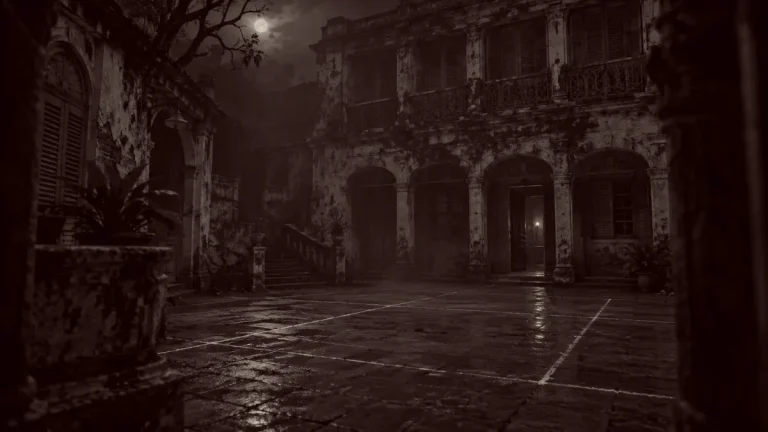
Three in the morning on a medical ward in North Wales. A small pale light comes along the floor from the lifts, and it always knows which bed.
Monday, 03:10
Ward Nine is quiet. Twenty-two beds, nineteen full, one HCA on her break, me at the station with a cold tea and the drug chart for bed 11 that nobody has signed since teatime. The strip light over bay C is flickering again. I’ve reported it three times.
I see it out of the corner of my eye first. A little light, low down, at the far end of the corridor by the lifts. The size of a candle flame, but paler. Bluish-white, like the light off a phone in a dark room. It’s moving along the floor. Not fast. About walking pace, if whatever was walking were very old.
I think it’s a reflection. Somebody’s watch, the window, a car in the car park below. It comes down the corridor past the sluice and turns into bay A and goes along the floor between the beds and stops at the foot of bed 4.
Bed 4 is Mrs. Pritchard, eighty-eight, chest infection, stable on obs at two.
The light stays a minute, two maybe. Then it isn’t there.
Monday, 05:40
Mrs. Pritchard passed. Peaceful. Her daughter didn’t make it from Llandudno in time. I did the obs at four and she was fine. I want that written down somewhere. She was fine.
* * *
Tuesday, 03:05
Mr. Hughes in bed 6 can’t sleep. He never sleeps. He was a quarryman at Penrhyn for forty years and he says his lungs are full of slate and they rattle when he lies flat, so he sits up in the chair by his bed with the blanket over his knees and talks to me when I go past.
He saw it too. I didn’t ask him. He said it.
“You saw the canwyll last night, didn’t you, cariad.”
I asked him what he meant, though I knew. My nain used to talk about it. The canwyll corff. The corpse candle. The little light that goes the way the coffin will go, a night or two before, from the bed to the door to the chapel to the grave.
“From the lift,” Mr. Hughes said, nodding at the far end of the corridor. “That’s the way they take them down now, isn’t it. To the mortuary. It used to come up the lane.” And he laughed, and the laugh turned into the cough, and I had to stand with him until it stopped.
Tuesday, 03:20
It came again. From the lifts. Down the corridor, into bay B, bed 9. Mr. Lewis-Owen, post-op, sitting up and eating toast at teatime and complaining about the toast.
Tuesday, 04:15
Bed 9. Crash call. PE, they think. Forty minutes. No.
* * *
Wednesday, 02:50
I’m not proud of this.
I moved them. I didn’t tell anyone why. I said to the HCA that bay B was too warm and I wanted to rotate people, and she looked at me like I’d lost my mind, because you don’t move people at three in the morning for warmth. I swapped bed 2 and bed 7. I moved the lady in 14 into the side room. I turned the beds so the feet faced the windows instead of the door. I don’t know what I thought I was doing. Confusing it.
Wednesday, 03:15
It came off the lift and down the corridor and didn’t even hesitate. Straight past bay B. Straight to the side room door. Under the door.
I went in. She was asleep. I sat with her. I held her hand and I said her name every few minutes and she said “Yes, love?” every time, a bit annoyed, and I stayed there until six, until it was getting light over the Menai and the day staff were coming in with their coffees.
She went at 06:20, at handover, while I was giving report. Sat up, said she felt a bit funny, and went.
* * *
Thursday, 03:00
Mr. Hughes.
It came for Mr. Hughes. I saw it coming down the corridor and I knew before it turned into bay A, I don’t know how, and I stood in its way. Actually stood in the corridor in front of it like you’d stop a child running into the road. It went round my feet. I felt nothing. Not cold, not warm. Nothing at all, which was worse.
It stopped at the foot of his chair.
He was awake, of course. He looked at it for a long time with his hands folded on the blanket.
“Duw, there it is,” he said. Quite pleased, as if it were a bus he’d been waiting for in the rain.
I said I’d get the doctor. I said I’d get the registrar, I’d get the outreach team, his sats were fine, his pressure was fine.
“Bethan, bach.” He’d never called me by my name before. He must have read the badge. “Don’t. Go and do your notes. You’ve been running around this place like a hen all week. Sit down a minute.”
Thursday, 04:50
Mr. Hughes passed. In the chair. I was with him. I didn’t do my notes. I did them after.
* * *
Friday, 03:10
Quiet night. Seventeen in. Two discharges, four deaths since Monday, bed 6 empty and stripped. The strip light in bay C is still flickering. I’ve stopped reporting it.
The lift pinged a minute ago. Nobody got out. The doors stood open on the empty lift with its little lit-up number and then closed again.
It’s coming down the corridor now. I’ve been watching it from the drugs trolley. Past the sluice. Past bay A, past bay B, not turning in. Past the side room. It’s coming along the middle of the floor towards the station, the way you’d come along a hospital corridor if you were wheeling something long and narrow and needed to keep it straight.
It’s stopped at my chair.
It’s just sitting there on the lino in front of the empty chair, pale and small and patient. The way it waited for the others.
Well.
I’ve put the drugs trolley back. I’ve signed the chart for bed 11, which still nobody had done. I’ve got a cold tea and a pen and three patients’ worth of evaluation to write up, and Mr. Hughes was right, I have been running around like a hen all week.
I’m sitting down now. I’m doing my notes. My writing is very neat tonight, considering.