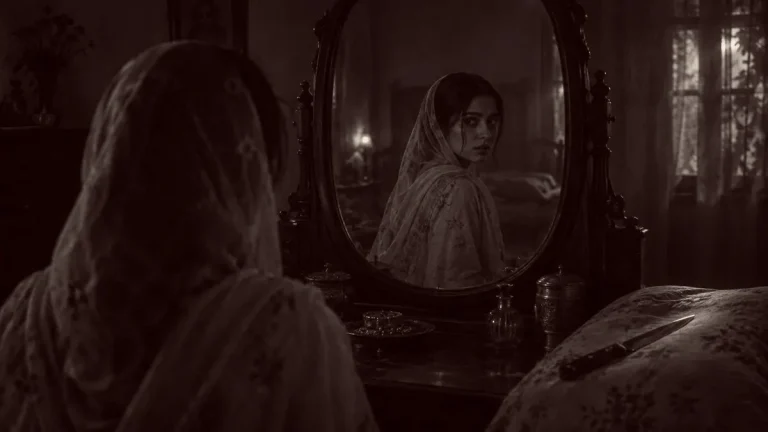
Every winter night in Lachen, Ama set one bowl more than there were people. The Delhi cousins thought it was sweet. Then one of them ate from it.
Six bowls. Ama said it the way she said everything in the kitchen, without turning round, and Dechen counted them down from the shelf above the bukhari: four of the blue ones with the chipped rims, Ama’s own wooden one with the silver lining, and the old one.
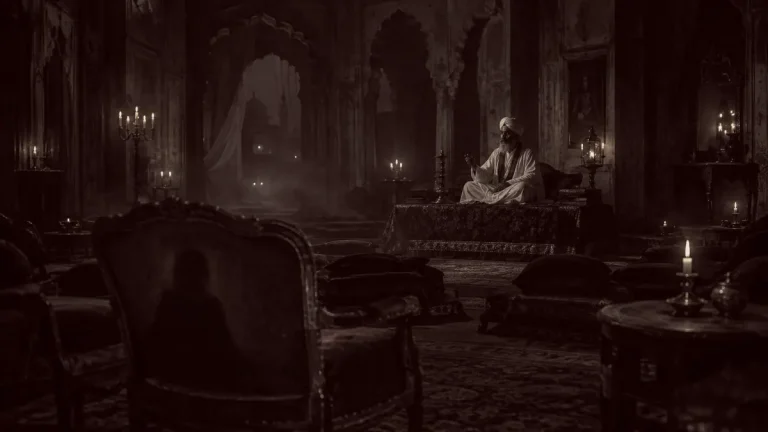
The old one was heavier than the others, dark wood gone almost black, with a crack across the bottom that Apa had once mended with a strip of copper. It lived on the highest shelf. It came down in October when the first snow closed the road to Thangu and went back up in April when the yaks came down. Nobody used it. Every evening Ama filled it first, before anyone else, and set it at the end of the table nearest the door, and every morning she emptied it into the snow behind the house.
“For whom?” Ritika had asked on the first night, delighted, phone already half out of her jacket.
“For the one who walks down from the pass,” Ama said.
“Like a guest?”
“Like a guest.”
“Aww,” said Ritika. “That’s so cute. Can I film it?”
* * *
The cousins had come for ten days. Their mother was Ama’s younger sister, who had married a Punjabi engineer in 2004 and moved to Dwarka and now came home every three or four years with presents of dry fruit and opinions about the toilets. This winter she’d sent the children by themselves. Ritika was nineteen, did something with marketing at a college in Noida, and had eleven thousand followers on an account that was mostly her hands holding coffee. Vansh was sixteen and had grown so tall since the last time that he banged his head on the kitchen beam twice on the first evening and was sulky about it for the rest of the night.
Dechen was seventeen and had never been to Delhi. She had expected to dislike them both, and was disappointed to find that mostly she didn’t. Ritika gave her a lip balm that smelled of mango and showed her how to edit a video so the cuts landed on the beat. Vansh beat her at carrom four games in a row and then let her win one, badly, so obviously that they both laughed.
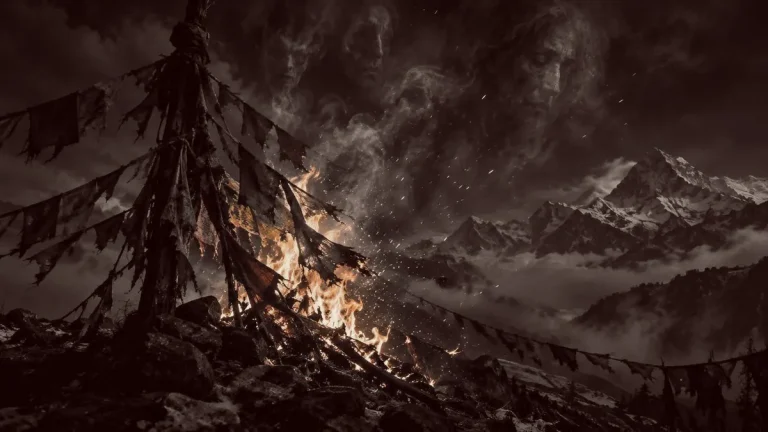
The homestay was closed to paying guests in January. Lachen in deep winter belonged to the people who lived there, the army trucks grinding up toward the border posts, the monastery’s long horns at dawn, and the snow, which came down off the slopes above the village in sheets and filled the lanes between the houses to the windowsills. The cousins had arrived the last day the road was open. They were stuck now till the BRO cleared it, which could be a week, could be three.
Ritika filmed everything. The prayer wheels. The frozen waterfall above the bridge. Apa splitting wood. Ama’s hands making momos. And the sixth bowl, every evening, steaming at the end of the table in front of the empty place, the thukpa going slowly cold, the noodles sinking.
“It’s literally so wholesome,” she said. “People are going to lose their minds.”
People did. The video got two hundred thousand views in three days, which Dechen did not entirely understand but which made Ritika so happy that she kept reading the comments aloud at dinner. Most of them were hearts. Some of them were from people in the plains who said this was the real India, which made Apa snort into his tea. And some of them, a few more each day, were jokes.
bro is feeding the yeti 😭
Yeti: finally some good food
one day the yeti will sit down and nobody will notice lol
* * *
It was Vansh who decided to eat it. Of course it was Vansh. He’d been quiet and bored for four days, and his sister was getting all the attention, and the comments had given him an idea.
On the fifth evening Ama filled the old bowl first, as always, with mutton thukpa, a big piece of fat floating on top. She set it at the end of the table and went back to the stove for the others. And Vansh slid along the bench into the empty place, picked up the old bowl in both hands, looked straight into his sister’s phone, and said, “Sorry, Yeti bhai, I’m also hungry,” and drank.
Ritika was already laughing. Dechen didn’t laugh. She didn’t do anything. She only noticed, afterwards, that she’d stood up.
Ama turned round from the stove with the ladle in her hand.
She didn’t shout. That was the worst of it. Ama shouted all the time, at the dog, at Apa, at the BRO officers who parked their trucks across her gate. She looked at Vansh with the bowl tipped up to his face and the broth running down his chin, and her face went completely flat, the way the snowfield above the village goes flat when the light leaves it.
“Put it down,” she said.
Vansh put it down. Half of it was gone. “Masi, it was a joke, I’ll… I can make it again, there’s loads in the…”
“Sit in your own place.”
He went back to his own place. Ama took the old bowl, walked to the door, opened it onto the dark and the cold coming in like a wall, and poured what was left into the snow. Then she washed the bowl and filled it again, to the brim, and set it back at the end of the table. Nobody ate for a while.
“It’s only a superstition,” Ritika said quietly, in English, to Dechen, under the table. “Right?”
Dechen didn’t answer. She was watching the steam rise off the refilled bowl, and thinking that it was the first time she’d ever seen Ama give the guest seconds.
* * *
The knocking started a little after one.
Dechen slept in the small room above the kitchen, where the stovepipe went up through the floor and kept it warm. She woke and didn’t know why, and then it came again. Three knocks, slow, on the roof. Not on the door. On the roof, right over her head, on the corrugated tin under its metre of snow.
Snow sliding, she thought. Snow does that. A slab breaks off the slope behind, it rolls, it hits.
Three more. Further along. Over the cousins’ room.
Then three over the kitchen. Then over Ama and Apa’s room. Then, very softly, the way you knock on a door when you don’t want to wake the whole house, three at the far end over the storeroom where nobody slept at all.
Then nothing. Dechen lay with her eyes open until the monastery horns started, long and low, at five.
In the morning Apa went out to clear the path, and came back in and stood in the kitchen doorway without taking off his boots, which he never did, and said to Ama in Lhopo, “You’d better come and look.”
The footprints went all the way round the house. One line, unbroken, close against the walls, under the windows. They had been made after the last snowfall and they were very clear. They were too long. That was the first thing anyone said. Too long for a man by almost half again, and narrow, and there was a gap in the middle of each one, as though whatever made them did not put its whole foot down but only the heel and the front.
Ritika was filming. Her hands were shaking.
Vansh looked at the prints and laughed in a way that didn’t work, and said someone in the village was pranking them, it was obvious, after the reel. Somebody’s cousin had seen it. He said it twice.
Ama followed the prints round to the back of the house, where the snow was trodden flat and grey in one place. The place where she emptied the guest’s bowl each morning. The prints went round and round it. Dechen counted the circles. There were six.
“Today,” Ama said, “nobody goes out. And tonight we set the table properly.”
* * *
Dechen didn’t remember, afterwards, setting the table that night.
She remembered the day: the cousins in the sitting room with the heater on high, not talking, Ritika deleting the reel and then putting it back up and then deleting it again; Apa on the phone to the panchayat about the road; the light going blue and then grey over the white slopes at three in the afternoon. She remembered Ama in the prayer room with the butter lamps lit, all of them, which she only did on the big days.
She remembered sitting down to eat. She remembered the thukpa was very good.
It was halfway through the meal, when Ritika said “Vansh, pass the chilli,” and two hands reached for the jar, that Dechen looked up properly at the table.
Six.
Ama at the stove end. Apa beside her, sleeves rolled, eating loudly. Ritika on the bench opposite, a little pale still. Dechen herself. And at the end, next to each other, two boys.
They were both tall. They both had the Delhi haircut, short at the sides. They were both wearing the grey hoodie that said NOIDA ATHLETICS that Vansh had worn every day of the trip. One of them had a red mark on his forehead from the kitchen beam. So did the other. They had both stopped, one hand each on the chilli jar, and were looking at each other with exactly the same expression, which was the expression of a sixteen-year-old boy who thinks someone is about to make fun of him.
“Arre, take it,” one of them said.
“You take it,” said the other.
Ritika laughed. She actually laughed, the way you laugh at your brothers. “You two,” she said. And went back to her noodles.
Dechen looked at Apa. Apa was eating. She looked at Ama.
Ama’s eyes were on the end of the table, where the sixth bowl had stood every winter evening of Dechen’s life. It wasn’t there. There was no sixth bowl. There were five blue ones, though Dechen had only ever taken four down from that shelf in her life, and Ama’s wooden one, and that made six, and there were six of them.
“Ama,” Dechen said, very quietly, in Lhopo, so the cousins wouldn’t follow. “Which one is…”
“Eat,” said Ama.
She got up and took the pot off the stove, and went down the table, and filled the two boys’ bowls to the brim, first one and then the other, exactly the same, the same piece of fat floating on each. One of the boys said thank you, Masi. So did the other. Their voices were the same voice.
When she came back past Dechen, Ama put a hand on her shoulder and bent down, as if to fix her collar.
“Don’t look at their feet,” she said.