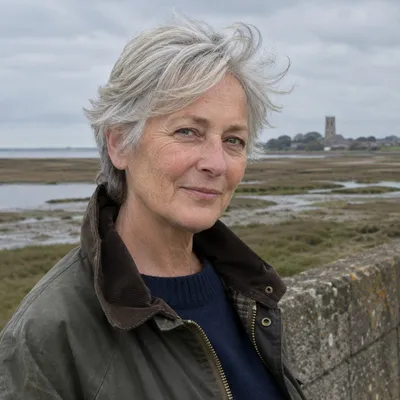
A retired history teacher agrees to write the parish guidebook. Then, at low tide, she starts hearing the bell of a church the sea took in 1607.
Tuesday 2 December
Agreed, against all my better instincts, to write the new parish history. Reverend Ostley caught me at the door after evensong, in his fleece, with the look of a man who has five parishes and one curate and a PCC that wants a guidebook in the church by Easter. The old one was written in 1962 by a Major Pelham and is, in the vicar’s word, “unreadable”, and in mine, wrong. It has the old church at Saltmarsh End destroyed in a storm in 1570, which is thirty-seven years out and the wrong century’s storm entirely.
I said I would do it for nothing, which he had been counting on, and that I would need the run of the record office, which he had not thought about at all.
Thirty years of teaching the Tudors to fourteen-year-olds in King’s Lynn. I can manage forty pages on a Norfolk village.
Thursday 4 December
Walked the sea wall at low tide with the Pagets’ spaniel, who is called Mabel and believes she is mine on weekdays. Bitter wind off the sea, the marsh all browns and silvers, the creeks drained to mud with that smell of rot and salt I have never once managed to describe to anyone who did not grow up with it.
Out past the last of the creeks, about where the old maps put the church, there is a long low hump of shingle and clay the village calls the Church Hills. On a big spring tide you can sometimes see dressed flint showing in it. Today it was just a dark line with gulls on it.
At ten past four, with the light going, I heard a bell.
One stroke. Not loud. It had that flat, swallowed sound bells have when the wind takes them, and I thought at once of St Margaret’s at Cley, or Blakeney, carrying on the wind. Except the wind was from the north. From the sea. Mabel stopped and looked out at the marsh with her ears up and would not come on until I picked up her lead.
I am recording it because I am writing a history and one is supposed to record things. Major Pelham, for his part, mentions “the old belief that the drowned bell of Saltmarsh End may be heard before a storm.” There was no storm. It was a perfectly ordinary grey afternoon.
Monday 8 December
Norwich, the record office. Mr Hales, the archivist, is about my age and has the courtesy of a man who has been asked for the Domesday entry by a great many people with a great deal of time on their hands. I explained what I wanted. He said, “Ah. Saltmarsh End,” in a tone I could not read, and went away for forty minutes.
What I have so far, in order.
The hamlet of Saltmarsh End stood out on the marsh, below the village, a dozen cottages of fishermen and wildfowlers and their families, poorer than the village and on worse ground. The church of St Edmund stood between them on a rise, nearer the hamlet than the village. It served both.
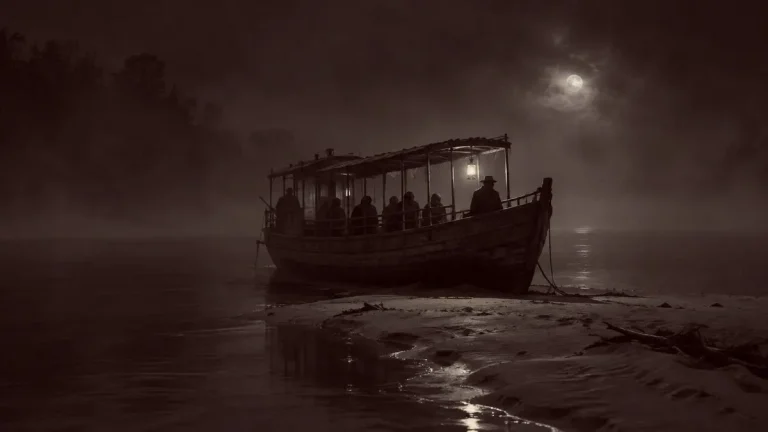
On the night of 19 November 1607, a tide came in over the marsh “higher by two yards than any man living had seen.” The hamlet was drowned entire. The church was undermined and its chancel fell that night. The tower stood, leaning, for another eleven years and then went into the sea in a gale in 1618, with its bell.
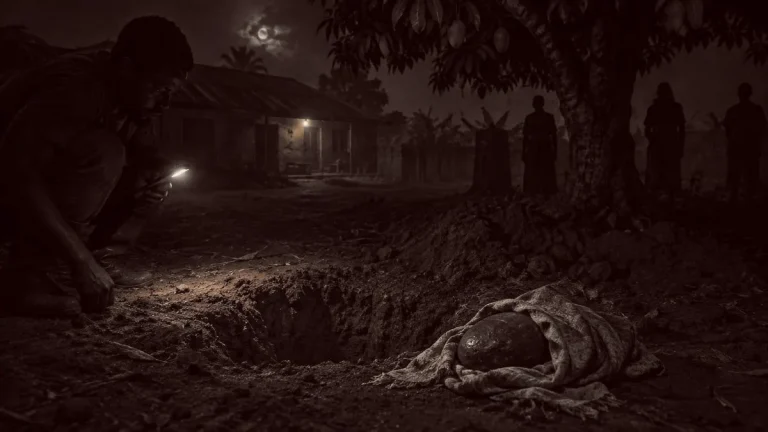
The village built a new church inland, the one I sit in on Sundays, between 1609 and 1614. The parish register for 1607 lists twenty-six burials in the last week of November. Most of the entries say only of Saltmarsh End, drowned. Some say not found.
All that I more or less knew. It is the stuff of guidebooks. Mr Hales then put down a second box, and took the lid off as if it might bite, and said, “You’ll want to see this. People generally don’t.”
Tuesday 9 December
Could not write last night. Here it is, then, plainly, the way I would put it on a worksheet.
In 1608 the bishop’s commissary heard a complaint in the consistory court at Norwich, brought by one Agnes Sallow, widow, “late of Saltmarsh End”, against eleven men of the village. The deposition survives, in a clerk’s hand, much faded along one edge where it has been damp.
Agnes said that on the night of the flood the men of the village, seeing the water rising, went up to St Edmund’s because it stood on the high ground, and took their families into the tower. That they rang the bell. That the people of Saltmarsh End, hearing it, did what they had always been told to do when the bell rang at night, and came out of their cottages and waded up through the rising water to the church. And that when they reached it, the door was barred from within, and would not be opened, though they beat on it and called the men by their Christian names.
There was room for perhaps thirty in the tower, she said. The village families were already thirty.
She survived by holding to the churchyard yew until morning. Her husband and three children did not.
The case seems to have gone nowhere. There is no judgment. There is a later note, in another hand, that the complainant “is distracted in her wits.” The eleven men are named. They come from seven families, there being fathers and sons among them. I copied them out in pencil and I find I do not want to write the names into this book. I have put the sheet in the back of my file.
Mr Hales watched me read it. When I had finished he said, “The Major left it out too,” and I said that I had no intention of leaving it out, and he said, “No. They never do, at first.”
I asked what he meant. He said he meant nothing at all, he was only an archivist, and did I want copies at forty pence a sheet.
Saturday 13 December
The bell again, half past two, low water. One stroke, clearer than before. Mabel sat down on the wall and would not move, and a man walking a Labrador further along stopped and looked out to sea as well, and then looked at me, and we both pretended we had stopped to look at a curlew.
I have been reading the tide tables. I have been reading them like a schoolgirl reading the Bible, looking for the bit with my name in it.
Tuesday 16 December
Old Mr Crane is missing.
He is eighty-eight and lives (lived, I find I am already writing) at the end of Marsh Lane with a home help who comes in mornings. Yesterday afternoon, at about half past three, he walked out of his back gate, down the lane and onto the marsh. Diane Rix, who keeps the shop, saw him go past the window and thought nothing of it, because he walked that way most days. The harbourmaster saw him from the quay, a long way out, walking along the line of the old creek in the direction of the Church Hills. In his slippers, the harbourmaster said. Quite steady. He said Mr Crane turned round and lifted a hand, as if to someone behind him.
Then the tide came, and the light went, and that was that. Lifeboat out from Wells, the coastguard, a helicopter clattering over the house until gone ten. Nothing.
Everyone is very sad and very practical. He was eighty-eight. He had been “a bit confused” lately, people say, though I spoke to him at the harvest supper about the price of diesel and he seemed a good deal less confused than I was. The home help is in pieces.
I heard the bell at three. One stroke.
Crane was on my pencilled sheet.
Wednesday 17 December
I have not mentioned it to anyone. What would I say to them? That a family named in a seventeenth-century court document still lived in the parish, which they did, which half of them do, this being Norfolk, where nobody has moved since the Black Death without a good reason. That I heard a bell. That I have done a little arithmetic in pencil on the back of a sheet.
I am a historian. I distrust a pattern that fits too neatly. Mr Crane was old and liked the marsh and the tide was a big one.
Sunday 21 December
Reverend Ostley preached on light coming into darkness and then, in the notices, asked us to remember Walter Crane in our prayers, and went a little pink, and said that the coastguard had not given up hope. He does not believe that, nor do any of us. Afterwards over the coffee he asked how the history was coming along and I said slowly, and he said, “The Saltmarsh End stuff, I suppose. Grim,” and then he looked at me with his kind tired face and said, “Do put it in, Margaret. All of it. People ought to know where they come from.” Which is a very modern Church of England thing to say, and I nearly told him everything, and then the churchwarden came over to talk about the boiler.
Saturday 27 December
Christmas at my sister-in-law’s in Lincoln. Bliss. Central heating, a television in every room, not a bell to be heard. I lay awake on Boxing Day night listening to the A15 and was perfectly happy.
Friday 2 January
Home. One stroke this afternoon, at low water. I counted the minutes after it until I felt foolish, and then I went on counting.
Monday 5 January
Gary Leeds, forty-four, husband of Joanne, father of two, plasterer, went onto the marsh on Saturday afternoon. He had been to the football in Norwich and came home and had a cup of tea and said he was going to stretch his legs. Joanne thought he meant to the pub. A man out after wigeon saw him walk past the hide, across the open mud, towards the Church Hills, with his hands in his pockets. He called out to him about the tide. Gary Leeds turned and smiled at him, the man said, and called back, “It’s all right, they’re waiting for us,” and went on.
Joanne Leeds has told the Eastern Daily Press that her husband was not depressed, had never been depressed, had tickets for Spain at Easter.
Leeds is on my sheet. The bell rang once that afternoon, Diane at the shop says. She heard it too. She has started to close up early.
Friday’s stroke I cannot account for. Nobody is missing. Unless somebody is missing whom nobody misses.
Wednesday 7 January
The register. I should have started with it, and I did not, and I know perfectly well why.
I have spent three days going down the seven families through four hundred years of baptisms, marriages and burials, the parish register and the bishop’s transcripts and the census and the obituary columns, the way I used to make the Year Tens do it for the Hearth Tax. It is dull work. It is the dullest work there is. You follow a name down a page until it stops.
Most of the seven stop of their own accord. They die out, or marry out, or go to Leicester in the 1950s and never come back. By last autumn, by my count, there were four lines with someone still living in the parish. I mean someone descended in the direct line who was born here and lives here. Crane: Walter. Leeds: Gary. Rix: Diane at the shop, and only Diane, who never married. Bulwer: a family up on the Holt road I know only to nod to. The other three I had down as gone, to Leicester or the churchyard.
Friday’s stroke, I have found. Pegg. A Sheila Pegg, in a home in Fakenham, ninety-three, died on the second of January in the afternoon. The home says peacefully. I telephoned and pretended to be a cousin and the girl said she had been asking to be taken to the seaside all day, and pointing at the window.
That is three. Crane, Leeds, Pegg. Three families, and the bell has rung once for each of them, and each time one of them has gone.
I am not going to write the last name down yet.
Friday 9 January
Went to see Diane at the shop. Bought a loaf I did not need. She was very pale and she had a radio on loud behind the counter, Radio Norfolk, a phone-in about parking in Cromer, and I understood that she had it on so as not to hear anything else.
I told her she ought to go away for a while. To family. She said she has no family, that was rather the point of her, wasn’t it, and laughed. Then she said, “You hear it too, Mrs Thew. Don’t you?” and I said yes, and she said, “Why do you, though? You’re not from here,” and I said nothing and paid for the loaf.
Saturday 10 January
My mother’s mother was a Gotts.
I have known that all my life and never once thought about it. Gran Gotts with her mangle and her Methodism and her ferocious seed cake. She was born in this parish in 1911 and left it at sixteen to go into service in Lynn and married a Lynn man and never, so far as anybody knew, came back here once. When Peter and I bought this cottage in 1998 my mother said, “Oh, Gran’s village,” as if remarking on the wallpaper, and that was all.
Gotts is the second name on my pencilled sheet. Two Gotts, father and son, holding the door.
My brother is dead. He had no children. My mother is dead. My aunt is dead. I went through it all last night and again this morning to be sure, the way you check a sum you already know is right, and I am the last of the Gotts line born in or living in this parish. I am the last of anyone.
So that is who the bell has been ringing for, all along, on the sea wall in December, with the spaniel sitting down. Not a warning. It was not a warning in 1607 either, not to the people on the marsh. It was what they had always been told: when the bell rings at night, come up to the church. Come. And they came.
Monday 12 January
Diane Rix. Saturday, at twenty to four, with the Open sign still on the door and the radio still going, the phone-in on to bin collections. Footprints on the mud from the end of the sea wall, the coastguard says, straight out. One set. Neat, evenly spaced. No sign of hurry.
I heard it ring once. I was at the kitchen window and I put down the cup I was holding very carefully on the draining board because I knew I would otherwise drop it.
Wednesday 14 January
Rang Mr Hales. I asked him straight out how many people had asked him for the Agnes Sallow deposition before me. He was quiet for a long time. Then he said, four, since he had been there, which is thirty-one years. A curate in 1996. Two local historians. The Major’s daughter. I asked what became of them. He said, “I’m an archivist, Mrs Thew. I can only tell you what’s on the record.” Then he said, “There’s no record of any of them finishing.”
I asked him why he had shown it to me. He said, “Because you asked for it. You’d be surprised how few people do.”
Thursday 22 January
Bell once yesterday. That is the fifth family: a man named Thurlow in a caravan out at Stiffkey who I did not even know was one of ours, Reverend Ostley tells me, gone from the beach at Stiffkey at low water. Not even our marsh. They have the whole coast now, it seems.
I have done what I can. I went to stay with Joyce in Lincoln again for a week and slept beautifully and came back. You cannot live in Lincoln on the strength of a seventeenth-century court case. And there is the history to finish.
Sunday 1 February
Six. The last but one, a young woman named Bulwer, twenty-two, back from university in Leeds for the weekend. I did not know her at all. Her mother found her bed made.
Reverend Ostley came round after evensong and sat in Peter’s chair with his coat on and said that the bishop had asked him whether there was “something in the water,” and that he had been on the phone to the county council about the sea wall, and that he did not know what to do, and was there anything I knew about the village, anything at all, from my work, that might help him understand. He has the face of a man who has buried four empty coffins in two months.
I gave him the draft of the history. The Saltmarsh End chapter is all there, Agnes Sallow and the barred door and the bell, and the eleven names and the seven families. All of it. People ought to know where they come from.
He read it at the kitchen table while I made tea. When he had finished he sat for a while. Then he said, “Gotts,” quietly, and looked at me, and I said, “Yes,” and he did not say anything else, which I thought was rather fine of him. He put his hand on my arm at the door.
Tuesday 10 February
The history is finished. Forty-four pages. Mr Hales has the typescript and the corrections and will see it to the printer if the PCC lose their nerve, which they will. I have sent the photographs separately: the 1588 map with the church marked, the 1618 churchwardens’ accounts with the entry for the bell that is lost, nothing, and the stretch of flint that showed in the Church Hills after the January tides.
The Pagets have their spaniel back. I told them I was going away, which is true.
Thursday 26 February
Low water today is at 15:52. A big spring tide, the biggest of the year according to the harbourmaster’s sheet, which means the water will go out a very long way and come back very fast.
I have turned off the immersion heater and the boiler and emptied the fridge into the Pagets’ green bin and left the key under the stone frog for Joyce. The cat food is on the back step for the Rixes’ cat, who seems to have no one now. The library books are on the hall table, labelled, with the 40p fine for the Pevsner in an envelope.
It is ten past three. The wind has gone round to the north and the marsh is very bright, all the creeks emptied to silver, and the Church Hills a long dark back out on the edge of it with the sea beyond.
In thirty years of school I was called Miss, and Mrs Thew, and once, by a boy in 9C, something I could not repeat in front of the vicar. I do not think anybody has called me home since Peter died. Not the way you call someone in for their tea.
It is a quarter past. There it is, out over the mud, one stroke, quite clear. And they are calling a name now, too, in the gap after the stroke, a woman’s voice and then several, over and over, patiently, the way you call someone you have been waiting for a long time on a cold night outside a door that will not open. It is not my name. It is Gran’s. It is all the Gotts names, the old ones, the ones on my pencilled sheet.
I shall wear my good coat. The ink is drying very well.
Friday 27 February